

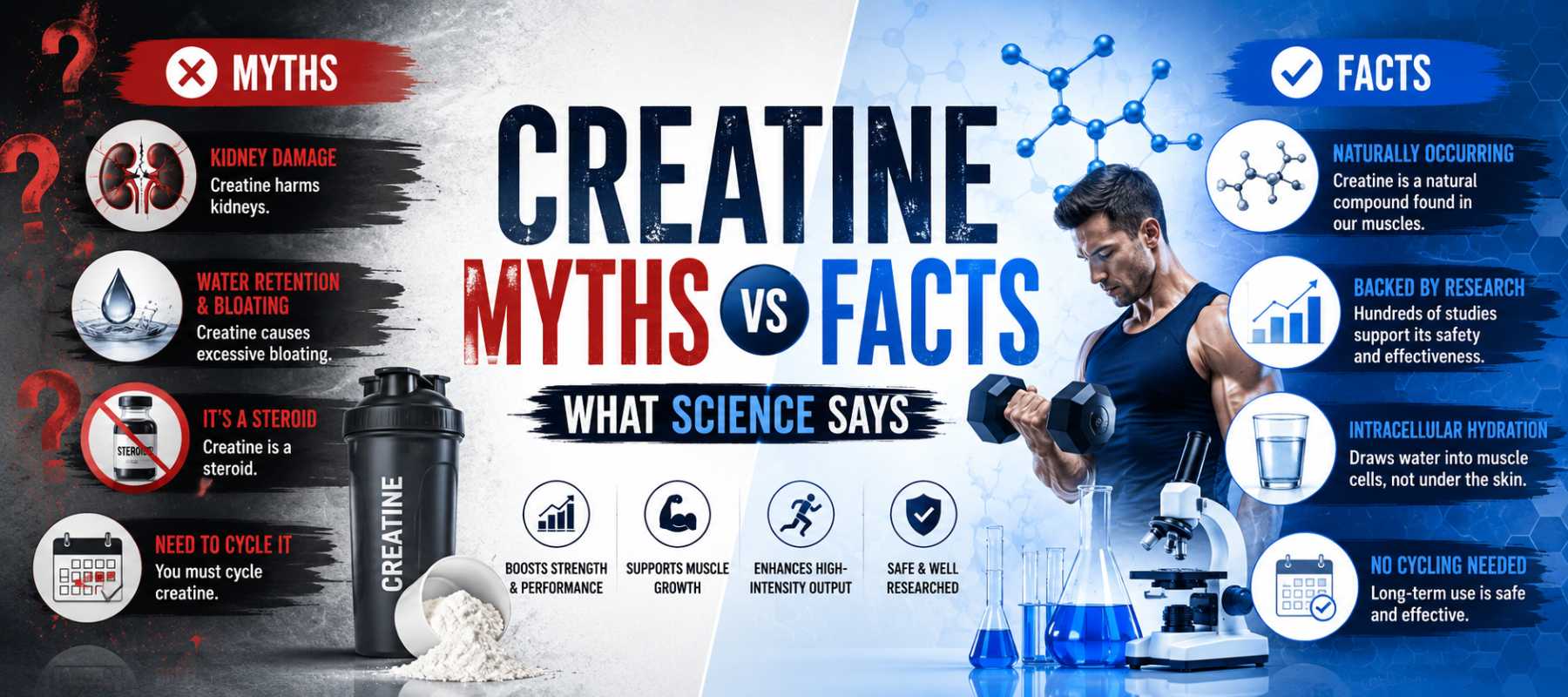
Creatine is among the most popular and extensively studied supplements in the fitness world. Despite its widespread use and strong scientific backing, several misconceptions continue to circulate. Many people are unsure whether creatine is safe, effective, or even necessary.
This article examines some of the most common myths about creatine and compares them with what scientific research actually shows.
Understanding Creatine
Creatine is a naturally occurring substance produced by the body and stored mainly in skeletal muscles. It plays a key role in energy production, particularly during short bursts of high-intensity exercise such as sprinting, weightlifting, and explosive athletic movements.
Small amounts of creatine can also be obtained through foods like meat and fish.
Myth 1: Creatine Is the Same as Steroids
Fact:
Creatine and anabolic steroids are completely different substances.
Steroids influence muscle growth by altering hormone levels, while creatine works by helping the body produce energy more efficiently during intense physical activity. It does not affect testosterone levels or act as a hormone.
Creatine supports performance through energy metabolism rather than hormonal changes.
Myth 2: Creatine Is Harmful to the Kidneys
Fact:
Studies have repeatedly shown that creatine is safe for healthy individuals.
Researchers have investigated creatine use for many years and found no evidence that recommended doses negatively affect kidney health in people without existing kidney disease. Although creatinine levels may rise slightly, this is a normal result of creatine metabolism and not necessarily a sign of kidney damage.
Anyone with a known kidney condition should seek medical advice before using supplements.
Myth 3: Creatine Causes Unhealthy Water Weight
Fact:
Creatine increases water inside muscle cells, not under the skin.
This process helps muscles stay hydrated and may contribute to a fuller appearance. The water retention associated with creatine is generally beneficial and differs from the bloating many people worry about.
Proper muscle hydration can also support exercise performance and recovery.
Myth 4: Only Bodybuilders Need Creatine
Fact:
Creatine can be useful for many active individuals.
Potential beneficiaries include:
- Strength athletes
- Recreational gym-goers
- Team sport athletes
- Older adults aiming to preserve muscle mass
- Vegetarians and vegans with naturally lower creatine intake
Its benefits extend far beyond bodybuilding.
Myth 5: Creatine Must Be Cycled
Fact:
There is no scientific evidence that cycling creatine is necessary.
Many users take creatine continuously for extended periods without issues. Research indicates that long-term supplementation at recommended levels remains both safe and effective.
Stopping and restarting creatine is generally a matter of personal preference rather than a requirement.
Myth 6: Creatine Leads to Dehydration and Cramps
Fact:
Research does not support this belief.
Although creatine draws water into muscle tissue, studies have not found a higher risk of dehydration, cramping, or heat-related illness among healthy users. In some cases, proper muscle hydration may even help support physical performance.
Regular water intake remains important for everyone, regardless of supplementation.
Myth 7: Results Appear Immediately
Fact:
Creatine takes time to build up in the muscles.
Many people expect instant improvements, but creatine works best when muscle stores become fully saturated. This process usually takes several days to a few weeks, depending on dosage and individual factors.
Consistent use is key to achieving optimal benefits.
Myth 8: Women Should Not Take Creatine
Fact:
Women can benefit from creatine supplementation as well.
Research suggests creatine may help support strength, exercise performance, recovery, and muscle maintenance in women. There is no scientific reason healthy women should avoid creatine when used appropriately.
Myth 9: Creatine Is Only About Muscle Growth
Fact:
Its benefits may extend beyond physical performance.
Scientists continue to explore creatine’s role in areas such as:
- Healthy aging
- Cognitive performance
- Muscle preservation
- Physical resilience
While further research is ongoing, creatine’s potential applications go beyond the gym environment.
Myth 10: Taking More Creatine Produces Better Results
Fact:
More is not always better.
Once the muscles are saturated with creatine, additional amounts offer little extra benefit. Excess creatine is simply eliminated by the body.
Consistency and proper dosage are generally more important than taking large quantities.
What the Research Shows
Scientific evidence consistently highlights creatine as one of the most effective supplements for improving physical performance. Studies have demonstrated benefits such as:
- Increased strength and power
- Enhanced exercise capacity
- Improved high-intensity performance
- Better training output
- Support for muscle growth when combined with resistance training
- Faster recovery between demanding workouts
Its effectiveness and safety have made it one of the most trusted supplements in sports nutrition.