

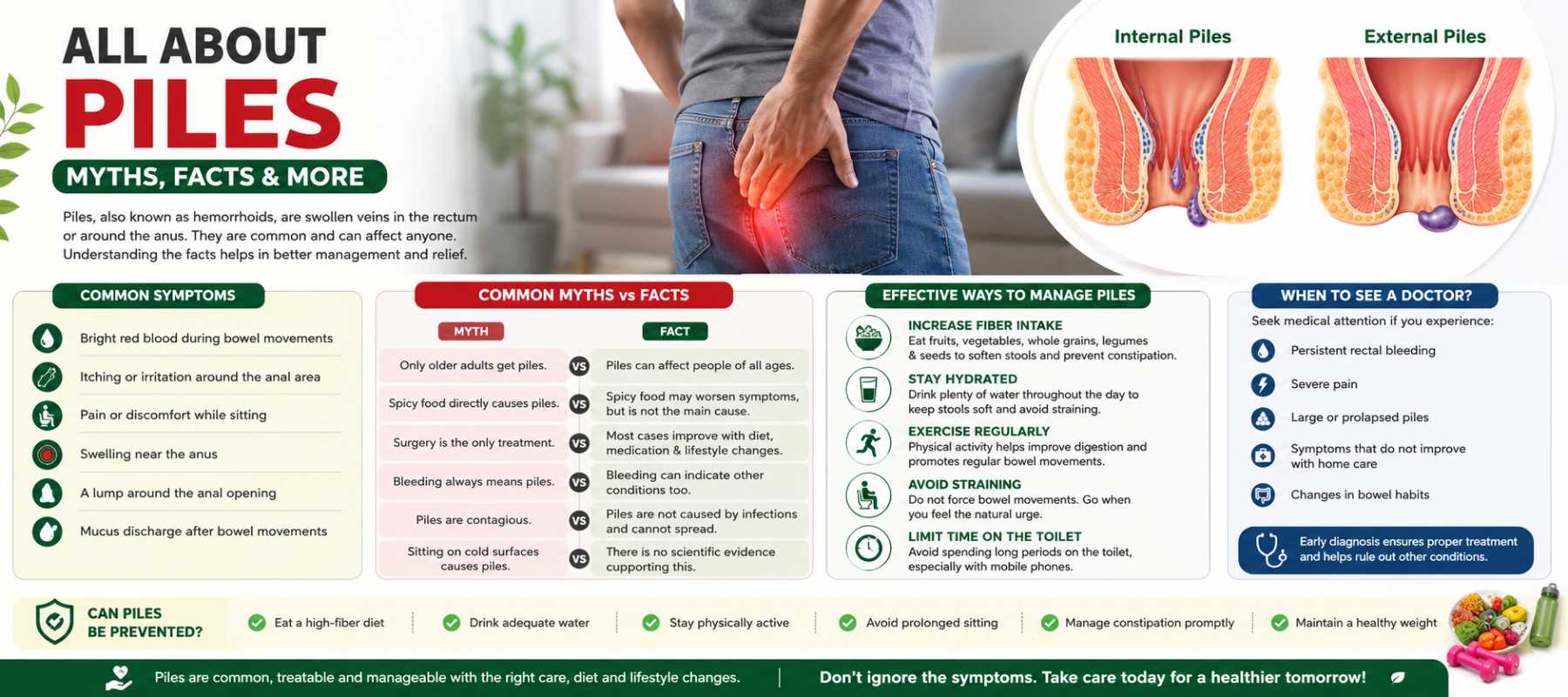
Piles, medically known as hemorrhoids, are a common condition that affects the veins in and around the rectum and anus. Although many people experience piles at some point in their lives, misinformation and social stigma often lead to confusion and delayed treatment. Learning the truth about piles can help you recognize symptoms early and take appropriate steps to manage them effectively.
Understanding Piles
Piles occur when veins in the lower rectum or around the anus become swollen and enlarged. They may develop internally within the rectum or externally beneath the skin surrounding the anus. While piles can be uncomfortable and sometimes painful, they are usually treatable and can often be prevented through healthy lifestyle habits.
Signs and Symptoms
The symptoms of piles can differ from person to person, but common indicators include:
- Bleeding during bowel movements
- Itching or irritation around the anus
- Pain or discomfort while sitting
- Swelling in the anal area
- A noticeable lump near the anus
- Mucus discharge after passing stool
Persistent or severe symptoms should always be assessed by a healthcare professional.
Why Do Piles Develop?
Several factors can increase the likelihood of developing piles:
Chronic Constipation
Frequent straining while passing stool places extra pressure on rectal veins.
Inadequate Fiber Intake
A diet low in fiber often results in harder stools, making bowel movements more difficult.
Extended Sitting
Long periods of sitting, especially on the toilet, may increase pressure on the veins around the rectum.
Pregnancy
Hormonal changes and increased pressure from the growing baby can contribute to piles during pregnancy.
Excess Body Weight
Being overweight can place additional strain on the veins in the pelvic region.
Heavy Physical Strain
Regular heavy lifting may raise abdominal pressure and increase the risk of piles.
Common Myths and the Real Facts
Myth: Piles Only Affect Older People
Fact: People of any age can develop piles. Lifestyle habits and digestive health play a major role.
Myth: Spicy Foods Cause Piles
Fact: Spicy foods do not directly cause piles, though they may aggravate symptoms in some individuals.
Myth: Surgery Is Always Necessary
Fact: Many cases improve with dietary adjustments, hydration, medications, and healthy habits. Surgery is usually reserved for more severe conditions.
Myth: Rectal Bleeding Means You Have Piles
Fact: Bleeding can result from several medical conditions. Professional evaluation is important if bleeding occurs regularly.
Myth: Piles Can Spread From Person to Person
Fact: Piles are not infectious and cannot be transmitted through contact.
Myth: Sitting on Cold Surfaces Causes Piles
Fact: There is no scientific evidence linking cold surfaces to the development of hemorrhoids.
Practical Tips for Managing Piles
Eat More Fiber-Rich Foods
Include foods such as:
- Fruits
- Vegetables
- Whole grains
- Oats
- Beans and legumes
- Seeds and nuts
Fiber supports smoother bowel movements and reduces straining.
Drink Plenty of Water
Proper hydration helps keep stools soft and easier to pass.
Stay Active
Regular exercise supports digestion and promotes healthy bowel function.
Avoid Excessive Straining
Allow bowel movements to happen naturally and avoid forcing them.
Reduce Toilet Time
Avoid spending unnecessary time on the toilet, especially while using mobile devices.
Maintain a Healthy Weight
Managing body weight can reduce pressure on veins and improve overall digestive health.
When Should You Seek Medical Advice?
Consult a healthcare professional if you experience:
- Ongoing rectal bleeding
- Significant pain or discomfort
- Large or protruding piles
- Symptoms that fail to improve
- Unusual changes in bowel habits
Prompt medical evaluation can help ensure accurate diagnosis and effective treatment.
Can Piles Be Prevented?
While prevention is not always possible, you can lower your risk by:
- Following a high-fiber diet
- Drinking sufficient water daily
- Staying physically active
- Avoiding prolonged sitting
- Addressing constipation early
- Maintaining a healthy body weight