

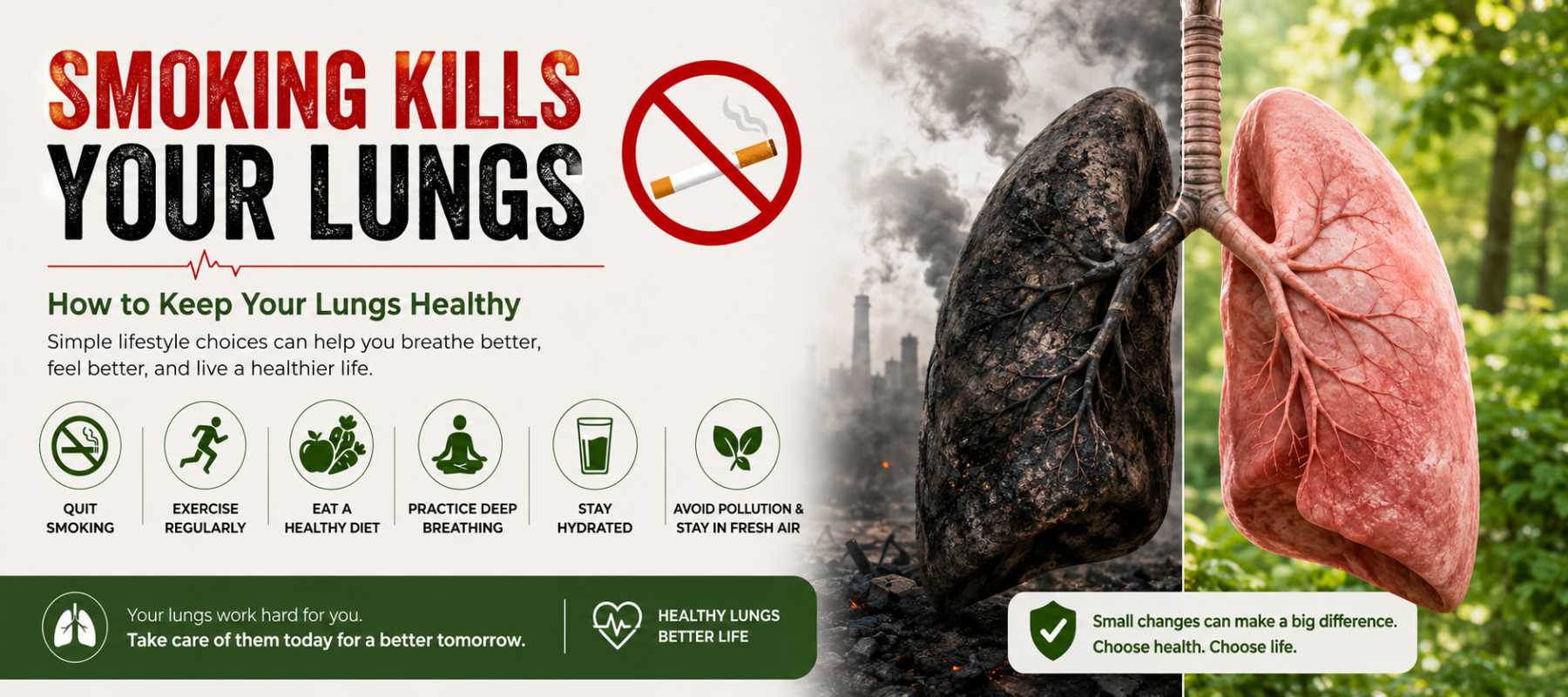
Your lungs are essential for life, delivering oxygen throughout your body and helping remove waste gases. However, smoking can seriously damage these vital organs. The harmful chemicals found in tobacco smoke gradually weaken lung function, making it harder to breathe and increasing the risk of long-term respiratory diseases.
Fortunately, adopting healthier habits can help support lung health and improve overall well-being.
The Impact of Smoking on Lung Health
Every cigarette exposes the lungs to toxic substances that irritate and inflame the respiratory system. Over time, smoking can:
- Reduce the lungs’ ability to absorb oxygen efficiently
- Damage the air sacs responsible for gas exchange
- Increase mucus buildup in the airways
- Cause chronic coughing and breathing difficulties
- Raise the likelihood of serious lung conditions
The longer a person smokes, the greater the potential damage to lung tissue and respiratory function.
Common Signs Your Lungs Need Attention
Unhealthy lungs may show several warning signs, including:
- Frequent coughing
- Breathlessness during normal activities
- Wheezing or chest tightness
- Repeated respiratory infections
- Excessive mucus production
- Reduced stamina and energy levels
Recognizing these symptoms early can help encourage positive lifestyle changes.
Effective Ways to Support Healthy Lungs
Stop Smoking
Quitting smoking is the most important step toward protecting your lungs. Once smoking stops, the body begins a natural healing process that can improve breathing and reduce health risks over time.
Stay Physically Active
Regular exercise helps strengthen the muscles involved in breathing and promotes better oxygen circulation. Walking, jogging, cycling, swimming, and yoga are excellent choices.
Practice Breathing Techniques
Deep breathing exercises can help improve lung efficiency and support relaxation. Consistent practice may contribute to better respiratory performance.
Drink Plenty of Water
Proper hydration helps keep mucus thinner, making it easier for the lungs to clear irritants and maintain healthy airway function.
Eat Nutrient-Rich Foods
A balanced diet supports overall respiratory health. Include:
- Green leafy vegetables
- Fresh fruits
- Berries
- Nuts and seeds
- Whole grains
- Omega-3-rich foods
These foods provide nutrients that help support the body’s natural defense systems.
Reduce Exposure to Pollutants
Avoid unnecessary exposure to dust, smoke, and environmental pollutants whenever possible. Using air purifiers and maintaining good ventilation indoors can help improve air quality.
Protect Yourself from Secondhand Smoke
Even if you do not smoke, inhaling smoke from others can affect lung health. Spending time in smoke-free environments helps reduce this risk.
Get Adequate Sleep
Quality sleep allows the body to recover and supports healthy immune and respiratory function.
Schedule Regular Health Checkups
Routine medical evaluations can help identify potential respiratory concerns early and support proactive health management.
Can Lung Health Improve After Quitting Smoking?
Yes. The body begins repairing itself soon after smoking cessation. Many people notice improvements in breathing, energy levels, and overall respiratory comfort within weeks or months. While some damage may be irreversible, quitting smoking significantly lowers the risk of future complications.
Conclusion
Smoking is one of the leading causes of lung damage and respiratory illness. Protecting your lungs starts with avoiding tobacco, staying active, eating a nutritious diet, and minimizing exposure to harmful pollutants. Small, consistent lifestyle changes can make a meaningful difference in maintaining healthier lungs and supporting long-term wellness.