


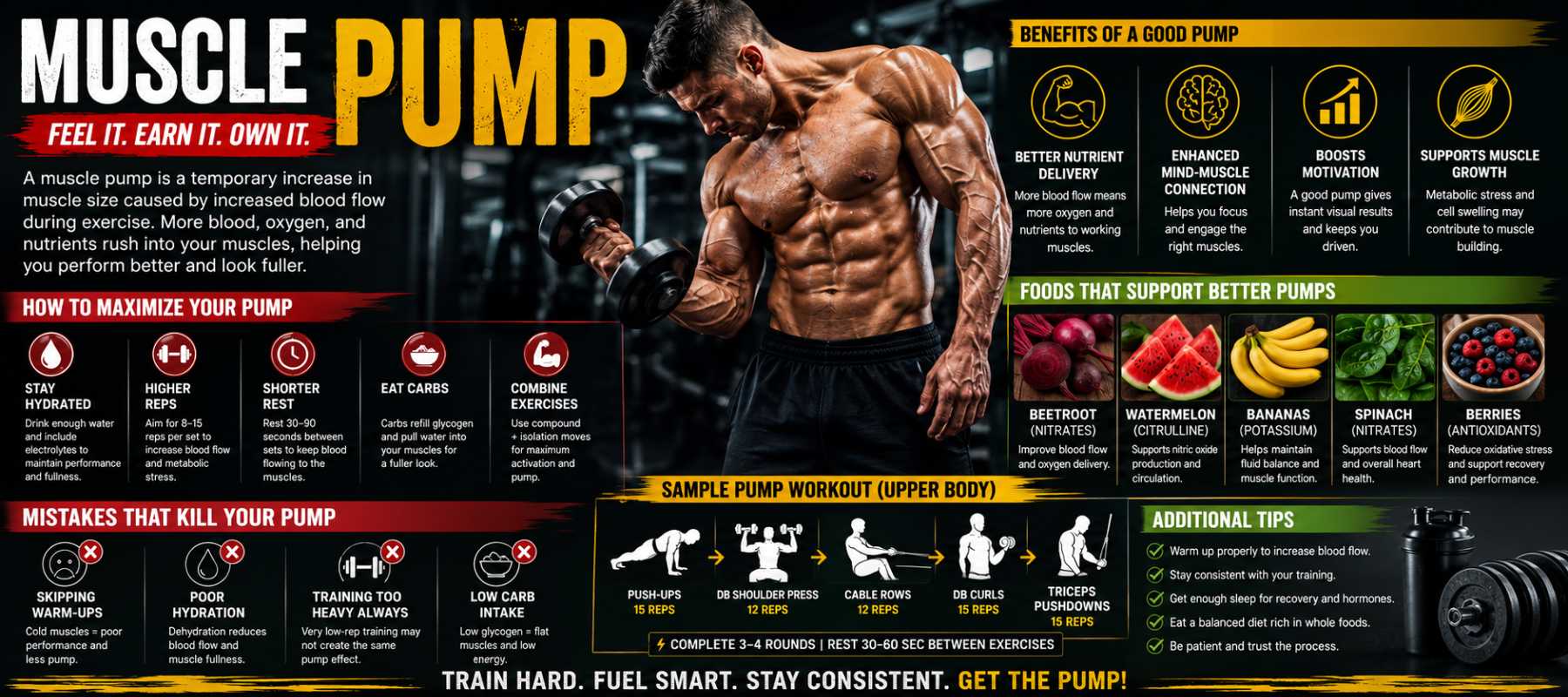
What Is a Muscle Pump?
A muscle pump is the temporary increase in muscle size and fullness that occurs during exercise. As you train, blood flow to the working muscles rises, causing them to appear larger, tighter, and more defined. This effect is especially noticeable after resistance training and is often one of the most satisfying parts of a workout.
Although the muscle pump is temporary, it reflects increased circulation and muscle engagement, both of which contribute to an effective training session.
The Science Behind the Pump
When muscles repeatedly contract during exercise, they demand more oxygen and nutrients. In response, the body sends additional blood to those muscles. As blood enters faster than it leaves, pressure builds within the muscle tissue, creating the “pumped” appearance.
Factors that contribute to a strong muscle pump include:
- Increased blood circulation
- Vasodilation (widening of blood vessels)
- Cellular hydration
- Metabolic by-product accumulation
- Continuous muscle contractions
Together, these processes create the swollen, energized feeling many gym-goers aim for during training.
Why a Muscle Pump Matters
Better Nutrient Transport
Enhanced blood flow helps deliver oxygen and essential nutrients to active muscles, supporting workout performance and recovery.
Stronger Mind-Muscle Connection
A noticeable pump can improve awareness of the target muscle, helping you maintain proper form and maximize muscle activation.
Increased Workout Motivation
Seeing muscles appear fuller and more defined can provide an immediate confidence boost and encourage training consistency.
Potential Support for Muscle Development
The cellular swelling associated with a pump may contribute to muscle-building signals when combined with progressive resistance training and proper nutrition.
Effective Ways to Enhance Your Muscle Pump
Maintain Proper Hydration
Hydrated muscles perform better and hold more fluid, which can improve fullness during exercise.
Hydration Tips:
- Drink water consistently throughout the day.
- Stay hydrated before and during workouts.
- Replenish electrolytes after intense training sessions.
Train in Moderate-to-High Rep Ranges
Higher repetitions can increase blood flow and metabolic stress, both important factors for achieving a strong pump.
Suggested Range:
- 8–15 repetitions per set
- 3–5 working sets
- Controlled movement tempo
Keep Rest Periods Short
Reducing rest times helps maintain blood flow within the working muscles.
Recommended Rest:
- 30–90 seconds between sets
Fuel Up With Carbohydrates
Carbohydrates replenish glycogen stores, which attract water into muscle cells and help muscles look fuller.
Good Pre-Workout Choices:
- Oatmeal
- Rice
- Bananas
- Sweet potatoes
- Whole-grain bread
Mix Compound and Isolation Exercises
Combining multi-joint movements with isolation exercises can increase overall muscle activation and blood flow.
Examples:
- Squats followed by Leg Extensions
- Bench Press followed by Chest Flyes
- Barbell Rows followed by Lat Pulldowns
- Barbell Curls followed by Hammer Curls
Foods That May Promote Better Pumps
Beetroot
Naturally rich in nitrates that may support healthy blood flow.
Watermelon
Contains citrulline, an amino acid associated with nitric oxide production.
Bananas
Provide potassium, which supports muscle function and hydration.
Spinach
A nutrient-dense leafy green containing naturally occurring nitrates.
Berries
Packed with antioxidants that support overall health and exercise recovery.
Common Pump-Killing Mistakes
Neglecting Warm-Ups
Cold muscles may not perform as efficiently, making it harder to achieve a quality pump.
Insufficient Hydration
Dehydration can reduce blood volume and negatively affect workout performance.
Focusing Only on Heavy Weights
Very low-repetition training often produces less metabolic stress and muscle fullness.
Low Carbohydrate Intake
Insufficient glycogen stores can leave muscles looking and feeling flat during workouts.
Sample Upper-Body Pump Routine
- Push-Ups – 15 reps
- Dumbbell Shoulder Press – 12 reps
- Seated Cable Rows – 12 reps
- Dumbbell Curls – 15 reps
- Triceps Pushdowns – 15 reps
Perform 3–4 rounds while keeping rest periods minimal to maintain muscle fullness throughout the session.