


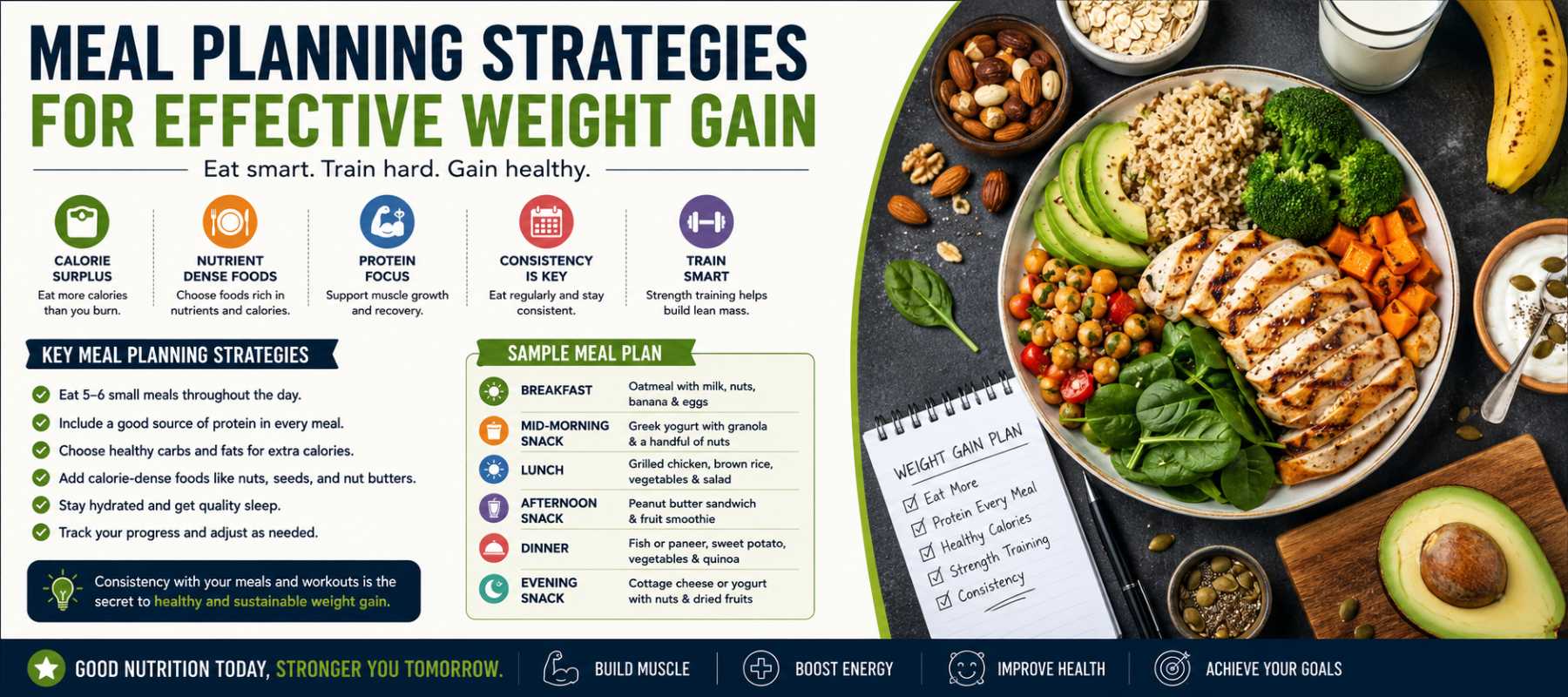
Achieving healthy weight gain requires a thoughtful approach to nutrition rather than simply increasing food intake. By creating a structured meal plan that includes the right balance of calories, protein, carbohydrates, and healthy fats, you can support muscle development, boost energy levels, and promote long-term wellness. Strategic meal planning makes it easier to stay consistent and reach your weight gain goals effectively.
Why Healthy Weight Gain Matters
Healthy weight gain focuses on increasing body mass through nutrient-rich foods and muscle-building activities rather than relying on empty calories. The aim is to gain quality weight while supporting overall health and physical performance.
Key factors include:
- Maintaining a calorie surplus
- Eating balanced, nutrient-rich meals
- Consuming sufficient protein
- Engaging in regular strength training
- Following a consistent eating schedule
Determine Your Daily Calorie Target
The foundation of weight gain is consuming more calories than your body uses. A daily surplus of 300–500 calories is generally recommended for gradual, sustainable weight gain. Those looking for faster results may consider increasing intake further based on individual needs and activity levels.
Choose Nutrient-Rich Foods
Selecting foods that provide both energy and essential nutrients is crucial for healthy weight gain.
High-Quality Protein Sources
- Eggs
- Poultry
- Fish
- Lean meats
- Greek yogurt
- Cottage cheese
- Paneer and tofu
- Lentils and beans
Energy-Boosting Carbohydrates
- Oats
- Brown rice
- Whole grain bread
- Sweet potatoes
- Quinoa
- Fruits
- Whole wheat pasta
Healthy Fat Sources
- Avocados
- Almonds and walnuts
- Nut butters
- Olive oil
- Seeds
- Coconut-based foods
Spread Calories Across Multiple Meals
Eating five to six smaller meals throughout the day can be more effective than relying on three large meals. Frequent meals help increase calorie intake while keeping digestion comfortable and energy levels stable.
Sample Daily Meal Structure
Breakfast
- Oats prepared with milk
- Eggs
- Whole grain toast
- Fresh fruit
Morning Snack
- Greek yogurt
- Mixed nuts
Lunch
- Grilled protein source
- Rice or whole grains
- Vegetables
- Healthy dressing or olive oil
Afternoon Snack
- Peanut butter sandwich
- Fruit-based smoothie
Dinner
- Protein-rich main course
- Sweet potatoes or rice
- Vegetables
Evening Snack
- Yogurt or cottage cheese
- Nuts and dried fruits
Include Protein in Every Meal
Protein plays a major role in muscle growth and recovery. Ensuring a protein source is included in every meal and snack helps maximize the benefits of a calorie surplus, especially when paired with resistance training.
Protein-rich snack ideas:
- Boiled eggs
- Protein smoothies
- Greek yogurt
- Roasted chickpeas
- Cheese cubes
Increase Calories Smartly
Small additions to meals can significantly boost calorie intake without requiring large portions.
Consider adding:
- Nut butters to oatmeal and smoothies
- Olive oil to salads and cooked dishes
- Nuts and seeds to yogurt
- Cheese to sandwiches and wraps
- Dried fruits to cereals and snacks
Prepare Meals Ahead of Time
Meal preparation can make healthy weight gain much easier. Planning and preparing meals in advance ensures you always have nutritious options available and reduces the chances of skipping meals.
Helpful meal prep habits include:
- Cooking proteins in bulk
- Preparing grains in advance
- Portioning snacks
- Storing ready-to-eat meals
Combine Nutrition with Strength Training
Exercise is an important component of healthy weight gain. Strength training encourages the body to build muscle and utilize additional calories efficiently.
Focus on:
- Compound movements
- Progressive resistance
- Recovery and sleep
- Consistent workout routines
Stay Properly Hydrated
Adequate hydration supports digestion, nutrient absorption, and overall health. Drink water regularly throughout the day, but avoid excessive fluid intake immediately before meals if it affects your appetite.
Common Mistakes That Can Slow Progress
- Missing meals regularly
- Depending on processed junk foods
- Consuming too little protein
- Inconsistent calorie intake
- Neglecting exercise
- Failing to monitor progress