


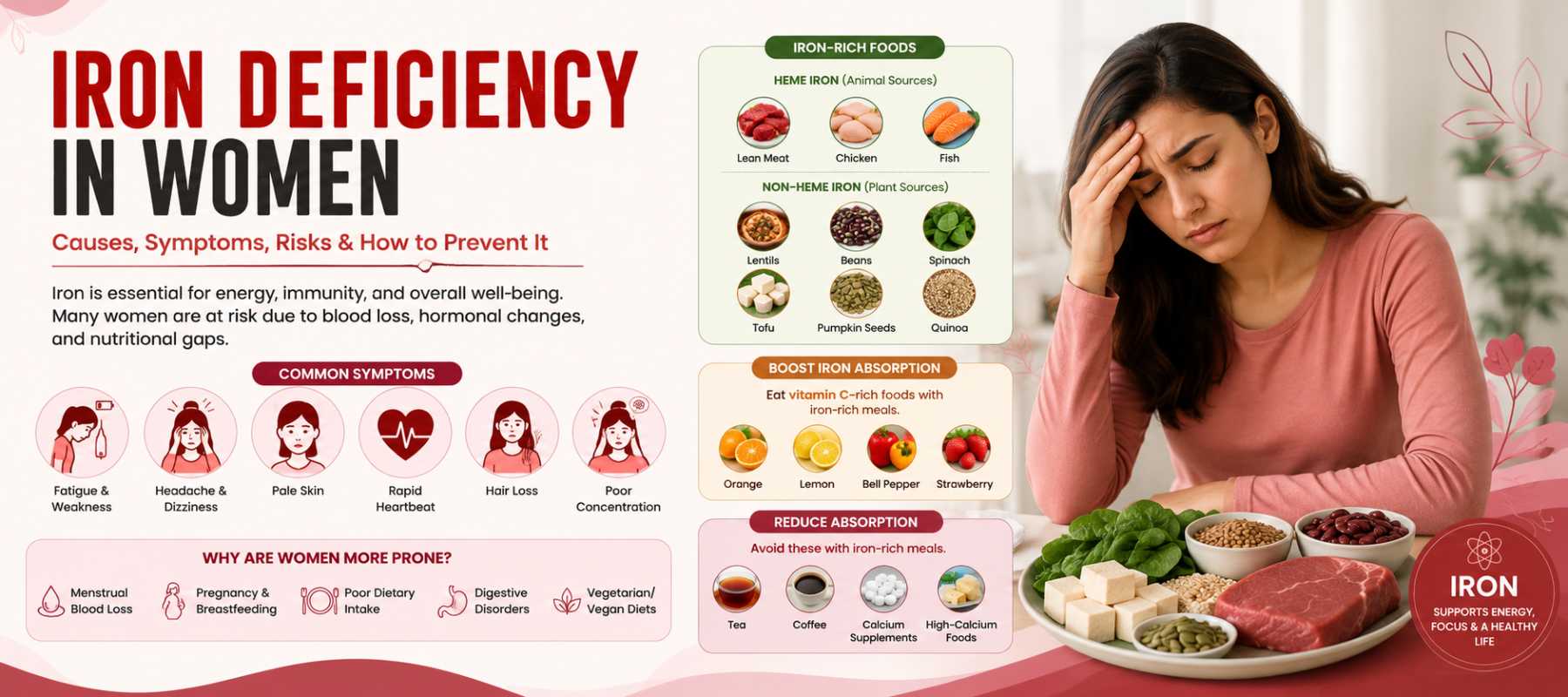
Iron deficiency is among the most widespread nutrient deficiencies across the globe, affecting millions of women of all ages. Iron is a vital mineral that enables the body to produce hemoglobin, the protein in red blood cells responsible for carrying oxygen from the lungs to tissues and organs. When the body lacks sufficient iron, hemoglobin production declines, reducing oxygen delivery and potentially leading to iron deficiency anemia if left untreated.
Recognizing the early signs, understanding the underlying causes, and following healthy nutrition habits can help prevent complications and support overall well-being.
What Is Iron Deficiency?
Iron deficiency develops when the body’s stored iron becomes too low to meet its daily needs. Since iron is essential for making healthy red blood cells, inadequate levels reduce the body’s ability to transport oxygen efficiently.
This condition often progresses gradually, and many people may not notice symptoms until iron stores become significantly depleted.
Why Is Iron Deficiency More Common in Women?
Women have higher iron requirements than men because of several natural physiological and lifestyle-related factors.
1. Menstrual Blood Loss
Regular menstrual cycles are one of the primary reasons women lose iron. Those who experience heavy periods are particularly vulnerable to developing iron deficiency.
2. Pregnancy
During pregnancy, the body’s demand for iron rises considerably to support increased blood volume and the healthy growth of the developing baby.
3. Breastfeeding and Postpartum Recovery
Although iron requirements change after childbirth, recovering from delivery and breastfeeding may still influence a woman’s overall iron status.
4. Poor Dietary Intake
Diets that lack iron-rich foods or are highly restrictive may not provide enough iron to meet the body’s daily requirements.
5. Vegetarian and Vegan Eating Patterns
Plant-based foods contain non-heme iron, which the body absorbs less efficiently than the heme iron found in meat, poultry, and fish.
6. Conditions Affecting Iron Absorption
Digestive disorders such as celiac disease, inflammatory bowel disease, or previous gastrointestinal surgery can interfere with the body’s ability to absorb iron properly.
Common Signs and Symptoms
Iron deficiency often develops slowly, and symptoms may become noticeable only after iron levels have dropped significantly. Common symptoms include:
- Constant tiredness or fatigue
- Weakness
- Pale skin
- Shortness of breath
- Frequent headaches
- Dizziness
- Cold hands and feet
- Brittle or weak nails
- Hair thinning or excessive hair loss
- Difficulty concentrating
- Rapid heartbeat
- Restless legs syndrome
- Cravings for non-food items such as ice, clay, or dirt (pica)
If these symptoms continue for an extended period, it is advisable to consult a healthcare professional.
Potential Health Complications
If left untreated, iron deficiency may result in several health problems, including:
- Iron deficiency anemia
- Reduced physical endurance
- Poor exercise performance
- Difficulty concentrating and impaired cognitive function
- Weakened immune function
- Greater susceptibility to infections
- Pregnancy complications, including low birth weight and premature delivery
- Reduced overall quality of life
Daily Iron Requirements for Women
The recommended daily intake of iron varies depending on age and life stage.
| Group | Recommended Daily Iron Intake |
|---|---|
| Women (19–50 years) | 18 mg |
| Women (51 years and older) | 8 mg |
| Pregnant women | 27 mg |
| Breastfeeding women | 9–10 mg (depending on age and individual needs) |
Individual requirements may differ, so personalized medical advice is always recommended.
Iron-Rich Foods
Animal Sources (Heme Iron)
Heme iron is absorbed more efficiently by the body and is found in foods such as:
- Lean beef
- Chicken
- Turkey
- Fish
- Liver (consume in moderation)
Plant Sources (Non-Heme Iron)
Excellent plant-based sources include:
- Lentils
- Chickpeas
- Kidney beans
- Soybeans
- Tofu
- Spinach
- Kale
- Pumpkin seeds
- Sesame seeds
- Quinoa
- Iron-fortified breakfast cereals
Foods That Help Increase Iron Absorption
Vitamin C enhances the absorption of non-heme iron from plant foods. Pair iron-rich meals with vitamin C-rich foods such as:
- Oranges
- Lemons
- Guava
- Kiwi
- Strawberries
- Tomatoes
- Bell peppers
- Broccoli
For example, adding lemon juice to spinach or combining lentils with tomatoes can improve iron absorption.
Foods That Can Reduce Iron Absorption
Certain foods and beverages may decrease iron absorption when consumed alongside iron-rich meals, including:
- Tea
- Coffee
- Calcium supplements
- High-calcium dairy products
- Foods high in phytates if they are not properly prepared
Spacing these foods and beverages away from iron-rich meals may help improve iron absorption.
Who Should Get Their Iron Levels Checked?
Consult a healthcare provider about iron testing if you:
- Experience persistent fatigue
- Have heavy menstrual bleeding
- Are pregnant or planning to become pregnant
- Follow a vegetarian or vegan diet
- Have digestive disorders that affect nutrient absorption
- Donate blood regularly
- Notice unexplained hair loss
Common laboratory tests used to evaluate iron status include:
- Complete Blood Count (CBC)
- Serum Ferritin
- Serum Iron
- Transferrin Saturation
- Total Iron-Binding Capacity (TIBC)
Are Iron Supplements Necessary?
Iron supplements can help restore iron levels in people with confirmed deficiency, but they should only be taken under the guidance of a healthcare professional. Self-supplementation is not recommended, as excessive iron intake may cause constipation, stomach discomfort, nausea, or iron overload.
The appropriate dosage and duration depend on individual blood test results and medical advice.
Practical Tips to Prevent Iron Deficiency
- Eat a balanced diet containing a variety of iron-rich foods.
- Combine plant-based iron sources with foods rich in vitamin C.
- Avoid drinking tea or coffee immediately after meals.
- Seek medical advice if you experience heavy menstrual bleeding.
- Attend regular prenatal check-ups during pregnancy.
- Consider routine iron screening if you belong to a higher-risk group.