

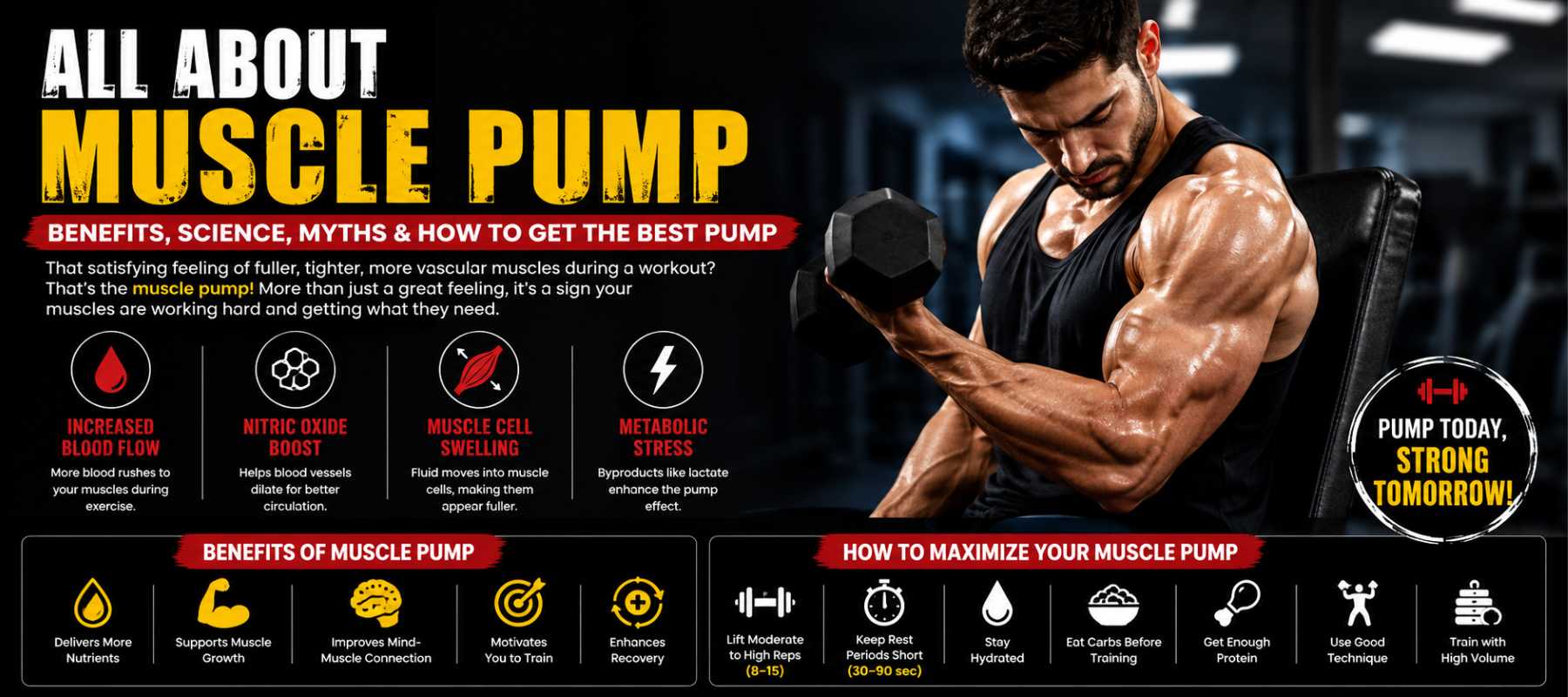
If you’ve ever completed an intense workout and noticed your muscles appearing larger, tighter, and more defined, you’ve experienced what’s known as a muscle pump. It’s one of the most rewarding feelings for gym-goers and athletes, often making muscles look fuller and veins more prominent. But is this effect simply temporary, or does it play a role in muscle development?
In this guide, we’ll explain what a muscle pump is, why it happens, its potential benefits, common misconceptions, and practical ways to achieve an even better pump during your workouts.
What Is a Muscle Pump?
A muscle pump, scientifically referred to as exercise-induced hyperemia, is the temporary increase in muscle size caused by enhanced blood flow during exercise. As you lift weights or perform resistance training, your muscles require more oxygen and nutrients to sustain performance.
To meet this demand, your cardiovascular system sends more blood to the active muscles. Because blood enters the muscles faster than it leaves, the muscle tissue temporarily swells, creating the well-known pumped appearance.
As a result, your muscles may look:
- Bigger
- Fuller
- Firmer
- More vascular
This effect is temporary and generally lasts from around 30 minutes to several hours after training.
What Causes a Muscle Pump?
Several natural processes contribute to creating a muscle pump during exercise.
Increased Blood Circulation
Active muscles demand more oxygen and nutrients, prompting the body to increase blood flow to those areas.
Nitric Oxide Release
Exercise encourages the production of nitric oxide, a compound that relaxes blood vessels, allowing them to widen and improve circulation.
Muscle Cell Hydration
As blood flow increases, fluid moves into muscle cells, causing them to expand and giving muscles a fuller appearance.
Metabolic Stress
Higher-repetition training produces metabolites such as lactate, which further promote blood flow and muscle cell swelling.
Benefits of a Muscle Pump
1. Improves Nutrient Delivery
Enhanced circulation allows muscles to receive more oxygen, amino acids, glucose, vitamins, and minerals during and after exercise.
2. May Support Muscle Growth
Although a muscle pump alone doesn’t build muscle, the resulting cell swelling may contribute to the body’s muscle-building processes when paired with proper resistance training and nutrition.
3. Enhances Mind-Muscle Connection
A strong pump often makes it easier to concentrate on contracting the target muscles, improving exercise quality.
4. Increases Workout Motivation
Seeing muscles appear larger and more defined during training can boost confidence and encourage greater consistency.
5. Supports Recovery
Better blood circulation helps transport nutrients needed for repair while assisting in the removal of metabolic waste products.
Does a Muscle Pump Mean You’re Building Muscle?
Not always.
A good pump indicates increased blood flow to the working muscles, but it isn’t a direct measure of muscle growth.
Real muscle development depends on several key factors, including:
- Progressive overload
- Adequate protein intake
- Balanced nutrition
- Proper recovery
- Quality sleep
- Consistent training
Think of a muscle pump as a positive training response rather than proof of long-term muscle gains.
How to Get a Better Muscle Pump
Train in the Moderate Rep Range
Performing 8–15 repetitions per set helps increase metabolic stress and blood flow.
Reduce Rest Between Sets
Keeping rest periods between 30 and 90 seconds helps maintain circulation to the working muscles.
Stay Well Hydrated
Proper hydration supports blood volume and helps muscles remain fully hydrated during training.
Consume Carbohydrates Before Exercise
Carbohydrates replenish muscle glycogen, drawing water into muscle cells and improving muscle fullness.
Eat Enough Protein
Protein provides essential amino acids that support muscle repair and recovery following workouts.
Focus on Proper Form
Using controlled movements and a full range of motion increases muscle activation and improves the pump.
Increase Training Volume
Performing additional sets and exercises for a muscle group can increase metabolic stress and enhance muscle fullness.
Nutrients That May Help Improve Muscle Pump
Several ingredients commonly found in pre-workout supplements may help promote better circulation and muscle fullness, including:
- L-Citrulline
- Citrulline Malate
- L-Arginine
- Beetroot Extract
- Natural Nitrates
- Electrolytes
These nutrients may support nitric oxide production, blood flow, and hydration, although results can differ between individuals.
Common Myths About Muscle Pump
Myth 1: A Bigger Pump Means Bigger Muscles
Fact: A muscle pump is temporary and shouldn’t be confused with permanent muscle growth.
Myth 2: Supplements Are Required for a Good Pump
Fact: Proper training, hydration, nutrition, and carbohydrate intake are often enough to produce an excellent pump naturally.
Myth 3: Heavy Weights Always Produce the Best Pump
Fact: Moderate weights combined with higher repetitions usually create greater metabolic stress, leading to a stronger pump.
Myth 4: The Pump Lasts All Day
Fact: In most cases, the pump gradually disappears within a few hours as blood flow returns to normal.
Can Beginners Experience a Muscle Pump?
Yes.
Whether you’re new to strength training or an experienced lifter, you can experience a muscle pump. As your training improves, you’ll often develop better muscle activation, making pumps even more noticeable over time.
Should You Train Only for the Pump?
While achieving a great pump feels satisfying, it shouldn’t be the primary goal of your workouts.
For long-term muscle development, prioritize:
- Progressive overload
- Proper exercise selection
- Balanced nutrition
- Adequate recovery
- Consistent training
These factors have a much greater impact on building strength and increasing muscle size over time.
Frequently Asked Questions
How long does a muscle pump typically last?
Most muscle pumps last anywhere from 30 minutes to several hours, depending on workout intensity, hydration status, and nutrition.
Is a muscle pump dangerous?
No. For healthy individuals, a muscle pump is a completely normal and healthy response to resistance exercise.
Can cardio produce a muscle pump?
Yes. Activities such as cycling, rowing, sprinting, or stair climbing can create a pump in the muscles being used during the exercise.
Does dehydration affect muscle pump?
Yes. Inadequate hydration can reduce blood volume and muscle cell hydration, making it more difficult to achieve a strong muscle pump.