

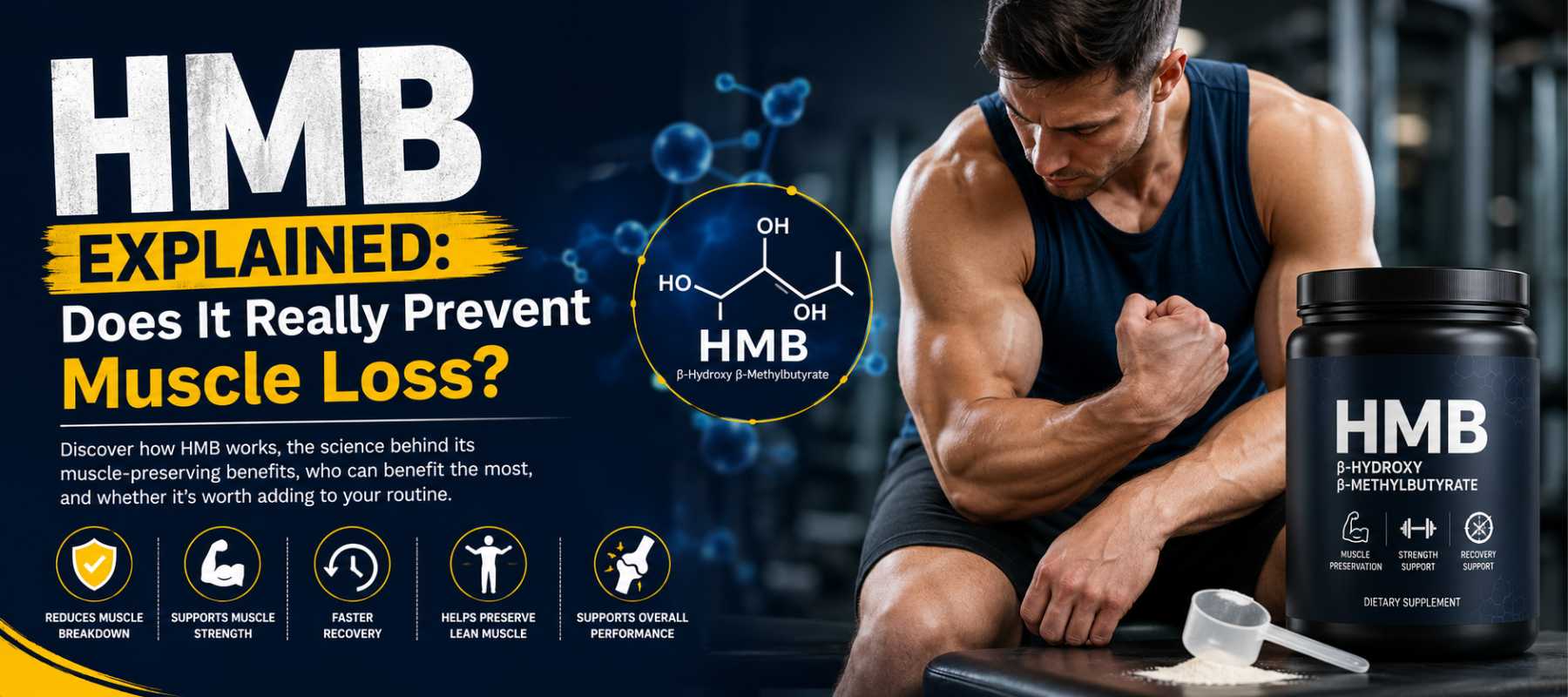
Maintaining muscle mass is important for strength, mobility, and overall health. However, muscle loss can occur due to several factors, including aging, inactivity, prolonged illness, calorie restriction, or demanding physical training. While resistance exercise and a balanced, protein-rich diet remain the most effective ways to preserve muscle, certain nutritional supplements may provide additional support.
One supplement that has attracted significant attention in the fitness and sports nutrition world is HMB (β-Hydroxy β-Methylbutyrate). It’s widely marketed for its ability to protect muscle tissue and improve recovery, but how effective is it really?
In this article, we’ll take a closer look at what HMB is, how it works, what research says about its effectiveness, and who may benefit the most from using it.
What Is HMB?
HMB, or β-Hydroxy β-Methylbutyrate, is a natural compound produced when the body breaks down leucine, one of the essential branched-chain amino acids (BCAAs). Leucine plays a key role in stimulating muscle protein synthesis, and a small percentage of it is converted into HMB during metabolism.
Although HMB is produced naturally and can be obtained from certain foods, the amount is relatively small. As a result, supplementation is often used to reach the levels commonly studied in clinical research.
How Does HMB Work?
Researchers believe HMB supports muscle health in two primary ways.
1. Helps Reduce Muscle Protein Breakdown
One of HMB’s primary functions is helping limit muscle protein breakdown. During periods of intense exercise, injury, illness, prolonged inactivity, or calorie restriction, the body may break down muscle tissue faster than it can rebuild it. HMB appears to help slow this process, making it easier to preserve lean muscle mass.
2. Supports Muscle Protein Synthesis
In addition to reducing muscle breakdown, HMB may also encourage muscle protein synthesis—the process responsible for building new muscle tissue. While this effect is generally considered less pronounced than its anti-catabolic action, it may still contribute to improved muscle maintenance when combined with proper training and nutrition.
Together, these mechanisms may help support muscle preservation and recovery.
Does HMB Really Prevent Muscle Loss?
The effectiveness of HMB largely depends on the individual and the circumstances.
Research suggests HMB may be beneficial for:
- People beginning a resistance training program
- Older adults experiencing age-related muscle loss
- Individuals recovering from injury, surgery, or illness
- Those following calorie-restricted diets for weight loss
- Athletes undergoing periods of intense or high-volume training
For experienced athletes who already follow structured training programs and consume adequate protein, the additional benefits of HMB appear to be smaller and less consistent.
Rather than viewing HMB as a miracle supplement, it’s best considered an aid that complements proper nutrition and regular exercise.
Potential Benefits of HMB
Helps Preserve Lean Muscle
HMB may reduce the rate of muscle protein breakdown during periods of physical stress, helping maintain lean muscle mass.
Supports Faster Recovery
Some studies indicate that HMB may reduce exercise-induced muscle damage, which can contribute to quicker recovery and less post-workout soreness.
May Improve Strength
When combined with resistance training, HMB has been shown to support modest improvements in strength, particularly among beginners or those returning to exercise.
Helps Protect Muscle During Weight Loss
Reducing calorie intake can increase the risk of muscle loss. HMB may help preserve muscle tissue while supporting fat loss, especially when paired with sufficient protein intake and strength training.
Supports Healthy Aging
Age-related muscle loss, known as sarcopenia, becomes more common with advancing age. Research suggests HMB may help older adults maintain muscle mass and physical function when combined with regular exercise and adequate protein.
What Does the Research Show?
The scientific evidence surrounding HMB is generally positive, although results are not identical across every study.
The strongest benefits have been observed in:
- Untrained individuals
- Older adults
- Clinical or hospitalized patients
- People recovering from injury or prolonged inactivity
Among well-trained athletes, findings are more mixed. While some research reports improvements in muscle recovery and preservation, other studies show little additional benefit beyond proper nutrition and resistance training.
Overall, current evidence suggests HMB can be a useful supplement in specific situations, particularly when muscle preservation is a priority.
Who May Benefit Most?
HMB supplementation may be especially helpful for:
- Individuals new to strength training
- Older adults aiming to maintain muscle mass
- People recovering after injury or surgery
- Individuals following fat-loss diets
- Athletes during periods of intense training
- People struggling to consume enough dietary protein
Who May Experience Limited Benefits?
HMB may provide fewer noticeable benefits for:
- Highly trained athletes with optimized nutrition
- Individuals who rarely exercise
- Those expecting significant muscle growth without proper training
Recommended Dosage
Most clinical studies have used a daily intake of 3 grams of HMB.
This amount is commonly consumed as:
- 1 gram, three times per day, or
- As directed according to the supplement manufacturer’s serving recommendations.
Regular daily use appears to be more important than taking it at a specific time.
Is HMB Safe?
Current research indicates that HMB is generally safe and well tolerated when consumed within recommended amounts.
Serious side effects have not been consistently reported in healthy adults.
However, anyone who is pregnant, breastfeeding, taking prescription medications, or managing a medical condition should consult a healthcare professional before starting any new supplement.
HMB vs. Leucine
Although closely related, HMB and leucine perform different roles within the body.
| Leucine | HMB |
|---|---|
| Essential amino acid | Metabolite produced from leucine |
| Primarily stimulates muscle protein synthesis | Primarily helps reduce muscle protein breakdown |
| Naturally abundant in protein-rich foods | Produced in small amounts naturally and available as a dietary supplement |
Together, they can complement one another in supporting muscle health.
Tips for Getting the Most from HMB
To maximize the potential benefits of HMB:
- Follow a consistent resistance training program.
- Consume adequate protein each day.
- Prioritize quality sleep and recovery.
- Stay physically active.
- Eat a balanced diet rich in whole foods.
- Use HMB consistently rather than occasionally.
Common Myths About HMB
Myth: HMB builds muscle without exercise.
Reality: Resistance training remains the primary driver of muscle growth. HMB is most effective when combined with regular exercise.
Myth: HMB can replace protein.
Reality: HMB is not a substitute for dietary protein. Meeting your daily protein requirements remains essential for muscle maintenance and growth.
Myth: Taking more HMB produces better results.
Reality: Research has not shown additional benefits from consuming amounts significantly higher than the commonly recommended 3 grams per day.
Myth: Everyone will gain muscle quickly with HMB.
Reality: Results vary depending on age, training experience, diet, lifestyle, and overall health.