

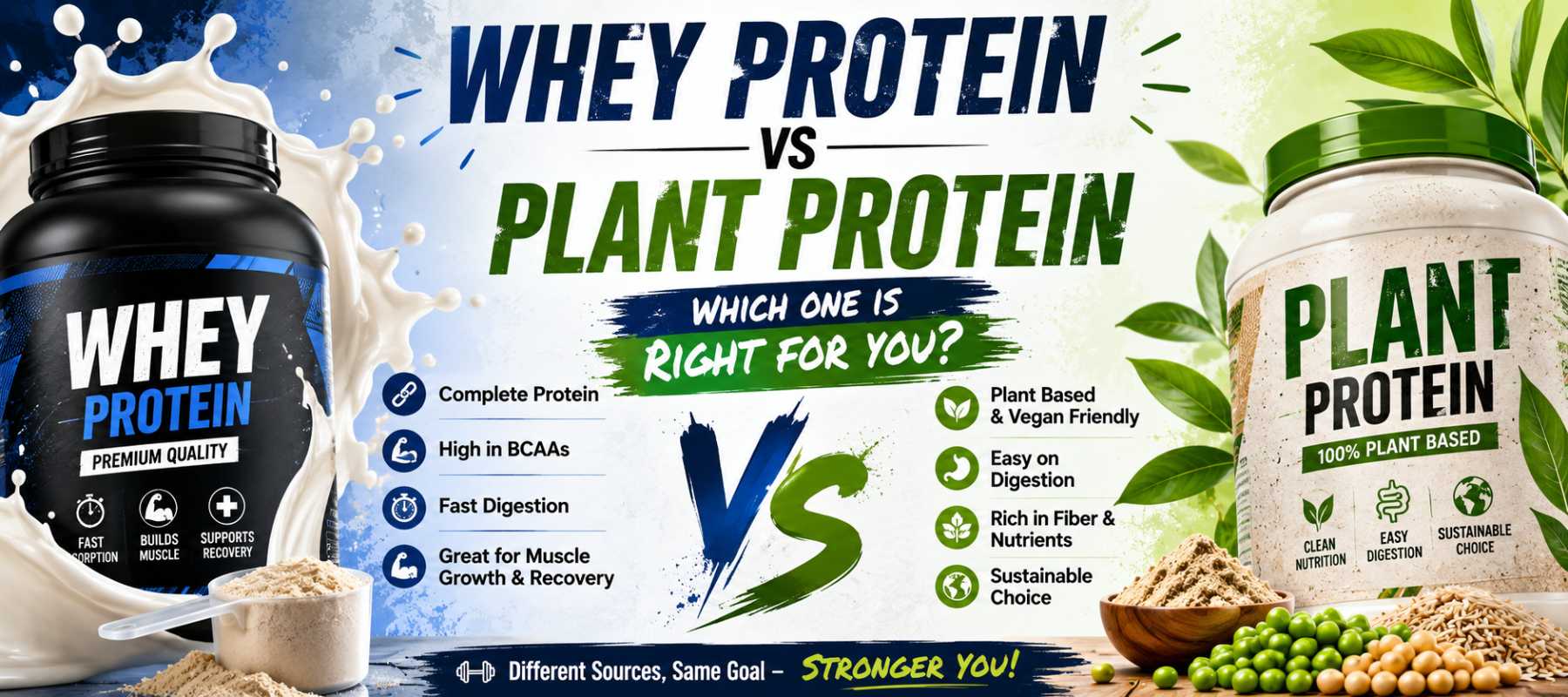
Protein supplements are a convenient way to support muscle recovery, strength development, and overall wellness. Among the most popular options available today are whey protein and plant protein. Both provide valuable nutrition, but they differ in their source, nutrient composition, digestion rate, and suitability for different dietary preferences.
What Is Whey Protein?
Whey protein is a dairy-derived protein obtained during the cheese production process. It is recognized as a complete protein because it contains all nine essential amino acids that the body cannot produce on its own. Its naturally high leucine content makes it especially effective for supporting muscle repair and growth after exercise.
Advantages of Whey Protein
- Contains all essential amino acids
- Rich in leucine, which supports muscle protein synthesis
- Quickly absorbed by the body
- Ideal for post-workout recovery
- Smooth texture and easy mixing properties
Considerations
- Not suitable for vegan diets
- May not be ideal for individuals with lactose sensitivity
- Derived from animal-based sources
What Is Plant Protein?
Plant protein is produced from ingredients such as peas, rice, soy, hemp, or a combination of several plant sources. Many modern plant protein blends are formulated to deliver a balanced amino acid profile that can effectively support fitness and health goals.
Advantages of Plant Protein
- Suitable for vegans and vegetarians
- Naturally free from lactose
- Often gentler on digestion
- Can provide additional nutrients such as fiber and minerals
- Generally considered a more environmentally friendly option
Considerations
- Some single-source plant proteins may contain lower amounts of certain amino acids
- Texture may be slightly thicker compared to whey protein
- Quality varies depending on the protein blend used
Comparing Whey and Plant Protein
Amino Acid Profile
Whey protein naturally provides all essential amino acids in optimal amounts. Plant proteins can also offer complete nutrition, especially when multiple plant sources are combined into one formula.
Digestion and Absorption
Whey protein is known for its rapid digestion and absorption, making it a popular post-workout choice. Plant proteins are typically absorbed at a moderate rate and may provide a more sustained release of amino acids.
Muscle Recovery and Growth
Whey protein is often preferred by athletes due to its high leucine content and fast absorption. However, plant protein can also effectively support muscle development when consumed in adequate amounts as part of a balanced diet.
Dietary Preferences
Those following vegan or dairy-free lifestyles often choose plant protein, while whey protein remains a popular option for individuals who consume dairy products and seek a traditional sports nutrition supplement.
Sustainability
Plant-based protein sources generally require fewer natural resources and have a lower environmental impact compared to dairy-based protein production.
Which Protein Should You Choose?
The right choice depends on your personal goals, dietary preferences, and digestive comfort.
Whey Protein May Be Ideal If You:
- Consume dairy products regularly
- Want fast post-workout recovery
- Prioritize maximum amino acid availability
- Prefer a smooth texture and flavor
Plant Protein May Be Ideal If You:
- Follow a vegan or vegetarian lifestyle
- Avoid dairy products
- Prefer plant-based nutrition
- Value sustainability and environmental responsibility