


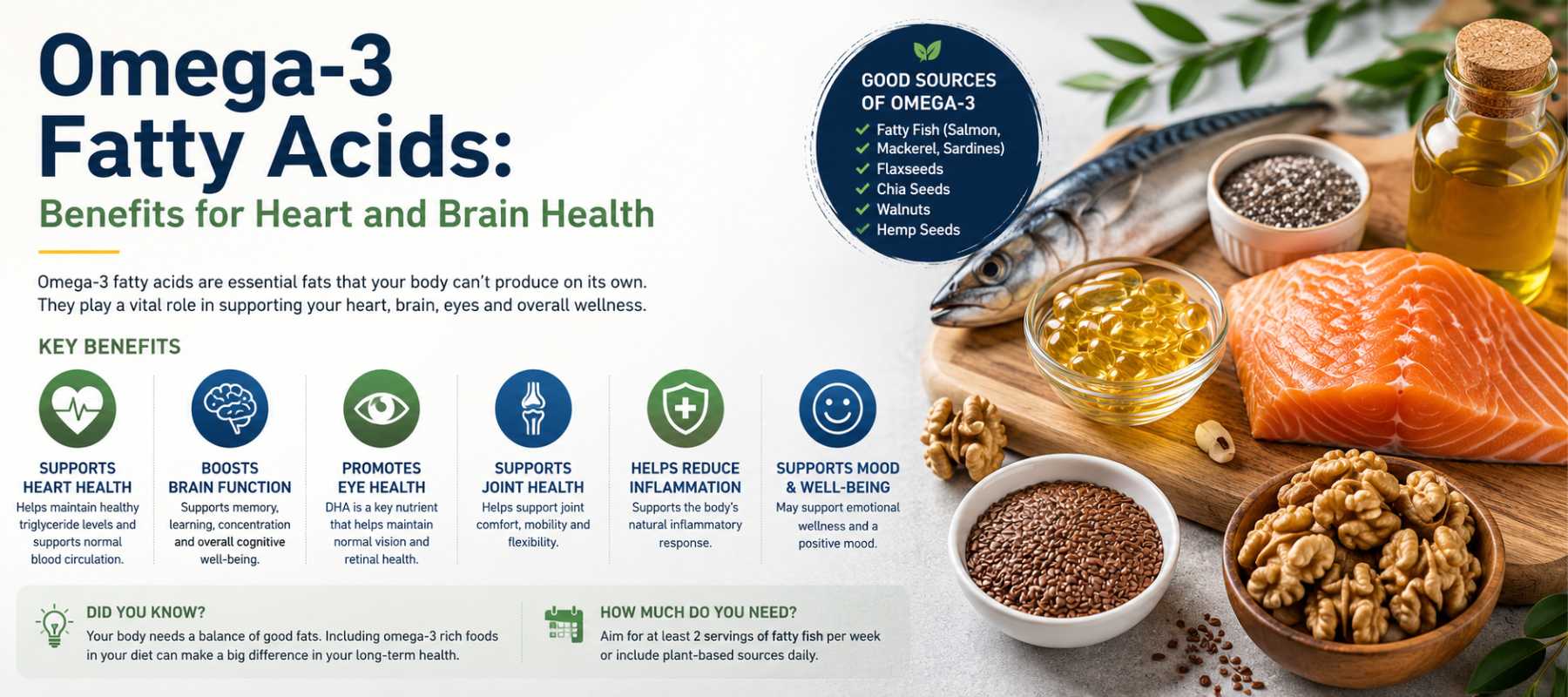
Omega-3 fatty acids are among the most extensively studied nutrients due to their wide-ranging health benefits. These healthy fats are known to support cardiovascular function, brain performance, eye health, and overall well-being. Since the body cannot produce sufficient amounts of omega-3s on its own, they are classified as essential fatty acids and must be obtained through food or dietary supplements.
Many modern eating habits provide an abundance of omega-6 fats but relatively little omega-3, creating an imbalance that may affect overall health. Including omega-3-rich foods as part of a balanced diet can help maintain optimal nutrition and support multiple body systems.
What Are Omega-3 Fatty Acids?
Omega-3 fatty acids belong to the family of polyunsaturated fats and are vital for numerous biological processes. The three primary forms include:
1. Alpha-Linolenic Acid (ALA)
ALA is the plant-based form of omega-3 and is naturally found in foods such as flaxseeds, chia seeds, walnuts, soybeans, and soybean oil. Although the body can convert small amounts of ALA into EPA and DHA, the conversion is limited, making direct dietary sources of these forms beneficial.
2. Eicosapentaenoic Acid (EPA)
EPA is primarily obtained from oily fish and seafood. It is widely recognized for supporting cardiovascular wellness and helping maintain the body’s natural inflammatory balance.
3. Docosahexaenoic Acid (DHA)
DHA is a major structural component of the brain, eyes, and nervous system. It plays an essential role in supporting cognitive performance, vision, and healthy neurological function throughout every stage of life.
Health Benefits of Omega-3 Fatty Acids
1. Supports Cardiovascular Health
One of the best-known advantages of omega-3 fatty acids is their contribution to heart health. Research indicates that adequate omega-3 intake may help:
- Support healthy triglyceride levels
- Promote normal blood circulation
- Help maintain blood pressure already within the healthy range
- Support normal blood vessel function
- Contribute to long-term cardiovascular wellness
Combining omega-3-rich foods with regular exercise and a balanced diet can help maintain a healthy heart.
2. Promotes Healthy Brain Function
The brain contains significant amounts of DHA, highlighting its importance for cognitive health. Adequate omega-3 intake may help support:
- Memory
- Learning capacity
- Focus and concentration
- Mental clarity
- Healthy cognitive aging
Maintaining sufficient DHA intake is important throughout adulthood and later life.
3. Helps Maintain Eye Health
DHA is one of the primary fats found in the retina, making it essential for maintaining normal vision. Consuming adequate omega-3s may support long-term eye health, particularly for individuals who spend extended periods using digital screens.
4. Supports a Healthy Inflammatory Response
Inflammation is a natural protective response within the body. However, maintaining a healthy inflammatory balance is important for overall wellness. Omega-3 fatty acids help support the body’s normal inflammatory processes and may contribute to joint comfort when combined with a healthy lifestyle.
5. Encourages Joint Comfort and Mobility
People with active lifestyles often include omega-3-rich foods as part of their nutrition plan to help support joint flexibility and ease of movement. Together with regular physical activity and balanced nutrition, omega-3s contribute to maintaining mobility and physical performance.
6. Supports Emotional and Mental Well-Being
Emerging evidence suggests omega-3 fatty acids may help support healthy brain chemistry and emotional wellness. While they are not intended to treat mental health conditions, they can play a valuable role in an overall healthy dietary pattern.
7. Supports Pregnancy and Early Development
During pregnancy, DHA is especially important for the healthy development of a baby’s brain and vision. Pregnant and breastfeeding women should consult a healthcare professional to determine their individual omega-3 requirements.
8. Promotes Healthy Skin
Healthy fats help maintain the skin’s protective barrier and moisture balance. Omega-3 fatty acids may support:
- Skin hydration
- Elasticity
- A healthy complexion
- Protection against excessive dryness
9. Supports an Active Lifestyle
Regular physical activity places increased nutritional demands on the body. Including omega-3-rich foods in a balanced eating plan may help support:
- Post-exercise recovery
- Joint comfort
- Cardiovascular endurance
- Overall physical wellness
10. Contributes to Overall Health
Because omega-3 fatty acids support several important body systems—including the heart, brain, eyes, joints, and skin—they are considered an essential part of a nutritious and balanced diet.
Best Dietary Sources of Omega-3
Adding a variety of omega-3-rich foods to your meals is one of the best ways to increase your intake.
Fatty Fish
- Salmon
- Mackerel
- Sardines
- Tuna
- Herring
Plant-Based Sources
- Flaxseeds
- Chia seeds
- Walnuts
- Hemp seeds
- Soybeans
Fortified Foods
- Omega-3-enriched eggs
- Fortified milk
- Fortified yogurt
Recommended Daily Intake
Omega-3 requirements vary depending on age, gender, and life stage. General recommendations include:
- Adult men: approximately 1.6 grams of ALA per day
- Adult women: approximately 1.1 grams of ALA per day
Pregnant and breastfeeding women may require additional DHA, as recommended by their healthcare provider.
People who consume seafood are generally encouraged to include at least two servings of fatty fish each week as part of a healthy eating pattern.
Simple Ways to Increase Omega-3 Intake
Improving your omega-3 intake doesn’t have to be complicated. Consider these practical tips:
- Enjoy fatty fish at least twice a week.
- Add ground flaxseeds to oatmeal, smoothies, or cereal.
- Sprinkle chia seeds over yogurt, salads, or breakfast bowls.
- Snack on a handful of walnuts.
- Choose omega-3-fortified foods when suitable.
- Pair omega-3-rich foods with plenty of fruits, vegetables, whole grains, and lean protein for a balanced diet.
Should You Take Omega-3 Supplements?
Some individuals may struggle to obtain enough omega-3 through food alone, especially those who rarely eat fish or follow vegetarian or vegan diets. In these situations, an omega-3 supplement may be considered after consulting a qualified healthcare professional.
While supplements can help bridge nutritional gaps, whole-food sources should remain the primary foundation of a healthy and balanced eating plan.