

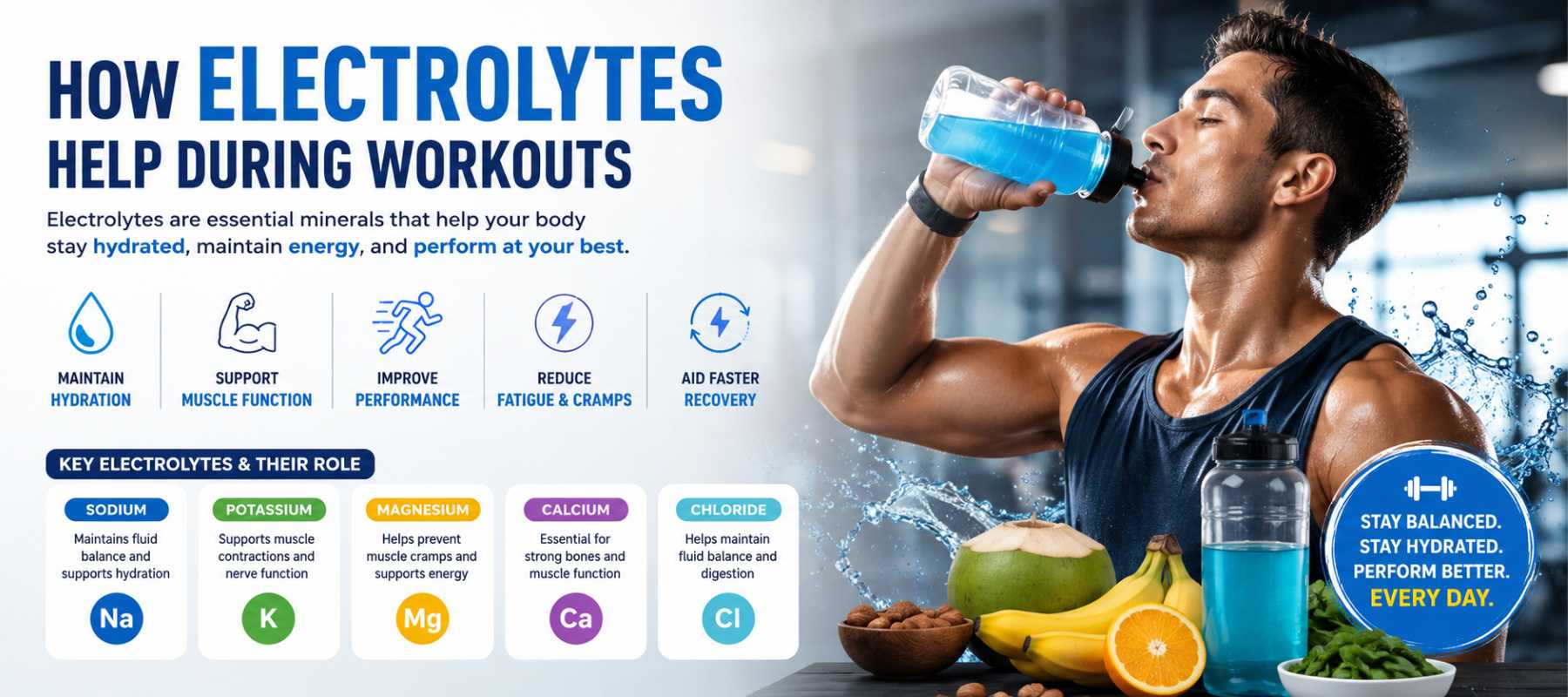
Proper hydration is one of the most important factors in achieving better workout performance. While drinking enough water is essential, hydration involves more than just fluids. Your body also needs electrolytes—essential minerals that help regulate muscle function, nerve signals, and fluid balance.
Whether you’re lifting weights, running, cycling, or participating in high-intensity training, maintaining healthy electrolyte levels can improve endurance, reduce fatigue, and support faster recovery.
What Are Electrolytes?
Electrolytes are minerals that carry an electrical charge when dissolved in body fluids. They play a vital role in many bodily functions, including hydration, muscle contractions, nerve communication, and maintaining the body’s fluid balance.
The major electrolytes include:
- Sodium
- Potassium
- Magnesium
- Calcium
- Chloride
- Phosphate
Together, these minerals help keep your body functioning efficiently before, during, and after exercise.
Why Are Electrolytes Important During Exercise?
Physical activity causes your body temperature to rise, leading to sweating. While sweating helps cool your body, it also results in the loss of water and essential minerals.
If these electrolytes aren’t replaced, you may notice:
- Muscle cramps
- Fatigue
- Reduced stamina
- Headaches
- Dizziness
- Poor concentration
- Decreased workout performance
Replenishing lost electrolytes helps your body stay hydrated and perform at its best throughout your training session.
Benefits of Electrolytes During Workouts
1. Support Optimal Hydration
Electrolytes help your body absorb, distribute, and retain fluids more effectively. Sodium plays a particularly important role in maintaining fluid balance, reducing the risk of dehydration during exercise.
2. Improve Muscle Performance
Healthy muscles rely on minerals like potassium, calcium, and magnesium to contract and relax efficiently. Proper electrolyte balance helps support smooth muscle function and may reduce the likelihood of cramps.
3. Boost Endurance
Maintaining hydration and electrolyte levels helps sustain energy, delay fatigue, and improve overall exercise performance—especially during long or intense training sessions.
4. Reduce Exercise-Related Fatigue
As electrolyte levels decline, physical performance can suffer. Replacing these essential minerals helps maintain normal muscle function and supports consistent energy levels during workouts.
5. Enhance Nerve Function
Electrolytes help transmit signals between your brain and muscles, allowing for better coordination, balance, and reaction time throughout physical activity.
6. Promote Faster Recovery
Restoring electrolyte levels after exercise helps replace what is lost through sweat, supports rehydration, and prepares your body for future workouts.
Common Signs of Electrolyte Loss
You may need to replenish electrolytes if you experience:
- Excessive sweating
- Muscle cramps or spasms
- Unusual tiredness
- Lightheadedness
- Persistent thirst
- Headaches after exercise
- Reduced exercise performance
Recognizing these signs early can help prevent dehydration and support better recovery.
Natural Food Sources of Electrolytes
Many everyday foods naturally provide important electrolytes.
Sodium
- Table salt
- Pickles
- Broths and soups
Potassium
- Bananas
- Oranges
- Sweet potatoes
- Avocados
- Coconut water
Magnesium
- Almonds
- Pumpkin seeds
- Spinach
- Dark chocolate
Calcium
- Milk
- Yogurt
- Cheese
- Tofu
Eating a balanced diet is often enough to maintain healthy electrolyte levels for people with moderate activity levels.
When Should You Replace Electrolytes?
Additional electrolytes may be beneficial if you:
- Exercise for longer than 60–90 minutes
- Train in hot or humid weather
- Participate in endurance sports
- Sweat heavily during workouts
- Complete multiple training sessions in a day
For shorter or low-intensity workouts, water and a nutritious diet are generally sufficient for maintaining hydration.
Can You Consume Too Many Electrolytes?
Yes. While electrolytes are essential, consuming excessive amounts through supplements or sports drinks when they aren’t needed can disrupt the body’s natural balance.
It’s best to replenish electrolytes according to your activity level, sweat loss, and individual hydration needs.
Tips for Staying Hydrated During Exercise
- Drink water before, during, and after your workout.
- Increase your fluid intake in hot and humid conditions.
- Include electrolyte-rich foods in your daily diet.
- Replace electrolytes after prolonged or intense exercise.
- Monitor your hydration by checking the color of your urine—it should generally be pale yellow.