

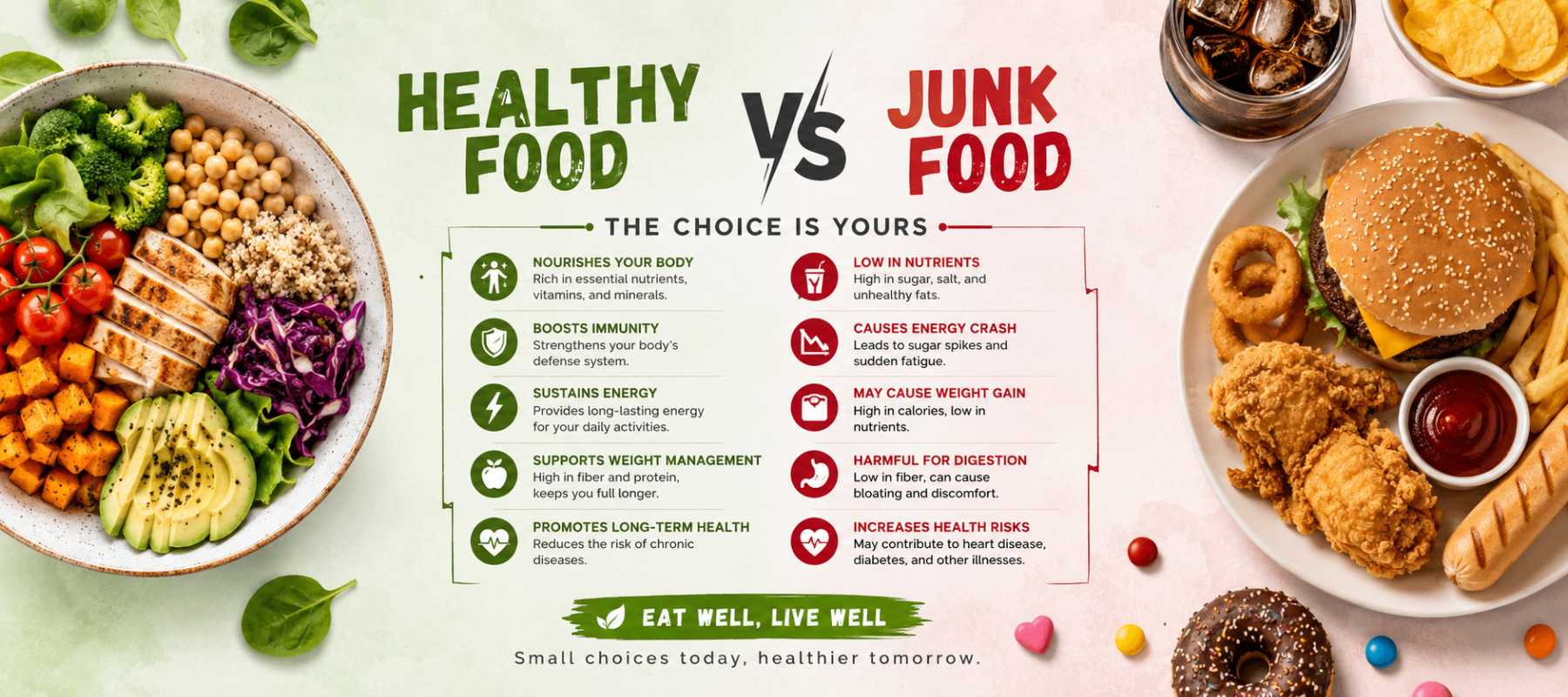
Modern lifestyles often make quick and convenient food options tempting. While processed snacks, sugary treats, and fast food may satisfy cravings, regularly choosing nutrient-rich foods can have a far greater impact on your health, energy, and overall quality of life.
Understanding how healthy foods differ from junk foods is the first step toward building better eating habits.
What Are Healthy Foods?
Healthy foods provide the body with essential nutrients needed for growth, repair, and daily functioning. They are naturally rich in vitamins, minerals, fiber, protein, and beneficial fats.
Examples include:
- Fresh fruits
- Colorful vegetables
- Whole grains
- Nuts and seeds
- Lean protein sources
- Beans and legumes
- Dairy or fortified plant-based alternatives
These foods help support physical health while keeping you energized throughout the day.
What Are Junk Foods?
Junk foods are typically highly processed and contain large amounts of added sugar, sodium, and unhealthy fats. While they are often tasty and convenient, they generally offer minimal nutritional value.
Examples include:
- Fried snacks
- Sugary beverages
- Candy and sweets
- Fast food meals
- Packaged chips
- Processed baked goods
- Instant snacks
Consuming these foods occasionally is fine, but making them a daily habit may negatively affect long-term health.
Healthy Food vs Junk Food: A Quick Comparison
| Healthy Food | Junk Food |
|---|---|
| Packed with nutrients | High in calories, low in nutrients |
| Supports body functions | Offers limited nutritional benefits |
| Helps maintain energy | Can lead to energy fluctuations |
| Promotes digestive wellness | May affect digestion negatively |
| Supports healthy weight goals | Often associated with overeating |
| Encourages overall wellness | May increase health-related risks |
Benefits of Choosing Healthy Foods
Supports Consistent Energy
Balanced meals containing protein, healthy fats, and complex carbohydrates provide steady energy without sudden crashes.
Helps Maintain Digestive Wellness
Foods rich in fiber support normal digestion and contribute to a healthier digestive system.
Strengthens Natural Defenses
A nutrient-rich diet provides vitamins and minerals that help support normal immune function.
Assists Weight Management
Wholesome foods are generally more satisfying, helping control hunger between meals.
Supports Heart Health
A diet centered around fruits, vegetables, whole grains, and healthy fats can contribute to cardiovascular wellness.
Potential Drawbacks of Frequent Junk Food Consumption
Increased Sugar Intake
Many processed foods contain large amounts of added sugar, which can contribute to frequent cravings and fluctuating energy levels.
Excess Calories
Junk foods are often calorie-dense, making it easy to consume more calories than the body requires.
Lower Nutrient Intake
Replacing balanced meals with processed foods may reduce the intake of essential nutrients.
Unhealthy Eating Patterns
Regularly consuming highly processed foods can make healthier choices less appealing over time.
Easy Tips for Healthier Eating
- Include vegetables in every meal.
- Choose fresh fruit when craving something sweet.
- Drink water regularly throughout the day.
- Select whole-grain options whenever possible.
- Keep nutritious snacks readily available.
- Limit heavily processed foods.
- Prepare home-cooked meals more often.
Finding the Right Balance
Healthy eating does not mean eliminating your favorite treats completely. Enjoying indulgent foods occasionally can be part of a balanced lifestyle. The goal is to make nutritious choices the foundation of your daily diet while treating less nutritious foods as occasional additions.