

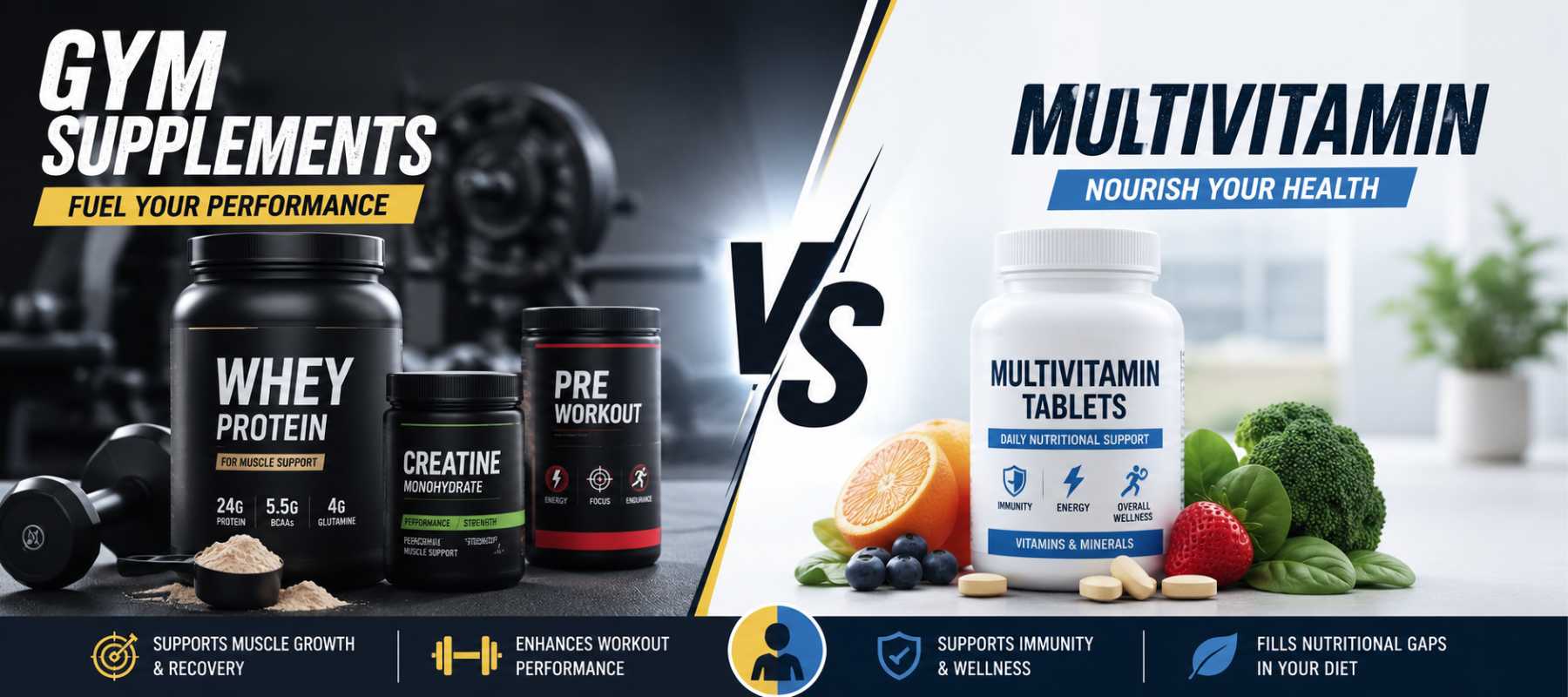
As more people embrace active lifestyles, the demand for nutritional supplements continues to grow. Whether you’re hitting the gym regularly or simply trying to stay healthy, you may wonder whether gym supplements or multivitamins are the better choice. Although both support your well-being, they serve different purposes. Understanding how each works can help you make informed decisions based on your health and fitness goals.
What Are Gym Supplements?
Gym supplements are specially formulated products designed to enhance physical performance, aid recovery, and support muscle development. They are commonly used by athletes, bodybuilders, and fitness enthusiasts to help meet the increased nutritional demands that come with regular exercise.
Some of the most popular gym supplements include:
- Protein powders
- Creatine
- Branched-Chain Amino Acids (BCAAs)
- Pre-workout formulas
- Post-workout recovery supplements
These products are commonly used to:
- Promote muscle growth and repair
- Improve workout performance and endurance
- Speed up post-exercise recovery
- Help meet daily protein and nutrient requirements
It’s important to remember that gym supplements are designed to complement a healthy diet—not replace nutritious whole foods.
What Is a Multivitamin?
A multivitamin is a dietary supplement that combines several essential vitamins and minerals into one convenient serving. Its main purpose is to support overall health by helping fill nutritional gaps that may result from poor eating habits, restrictive diets, or busy lifestyles.
Most multivitamins include nutrients such as:
- Vitamin A
- Vitamin C
- Vitamin D
- Vitamin E
- B-Complex Vitamins
- Zinc
- Magnesium
- Iron (depending on the formula)
Unlike fitness supplements, multivitamins are intended to support normal body functions, immune health, energy production, and overall wellness rather than directly improving exercise performance.
Gym Supplements vs. Multivitamins: What’s the Difference?
1. Primary Purpose
Gym supplements are designed to help improve athletic performance, muscle recovery, strength, and endurance.
Multivitamins, on the other hand, focus on maintaining overall nutritional balance and supporting everyday health.
2. Nutritional Profile
Fitness supplements typically provide targeted ingredients that serve a specific function. For example, protein powders supply amino acids needed for muscle repair, while creatine helps improve strength and power during high-intensity exercise.
Multivitamins provide a broad range of vitamins and minerals but generally do not contain significant amounts of protein or performance-support ingredients.
3. Who Should Use Them?
Gym supplements may benefit individuals who:
- Exercise regularly
- Participate in strength training
- Have higher protein or recovery needs
- Want to support muscle growth and athletic performance
Multivitamins may be suitable for people who:
- Have nutritional deficiencies
- Eat an inconsistent or restricted diet
- Want to support immunity and overall health
- Need additional vitamins and minerals due to lifestyle demands
Can a Multivitamin Replace Gym Supplements?
Not really.
Although multivitamins provide essential micronutrients, they cannot replace the specialized nutrients found in gym supplements. For instance, a multivitamin won’t supply enough protein for muscle recovery or creatine for improved exercise performance.
Likewise, gym supplements are not designed to provide the complete range of vitamins and minerals your body requires for everyday health.
Someone may consume enough protein for muscle growth but still fall short on nutrients like vitamin D, magnesium, or zinc. In these situations, a multivitamin can help bridge those nutritional gaps while workout supplements continue to support fitness goals.
Should You Take Both?
The right choice depends on your daily diet, activity level, and personal objectives.
A multivitamin alone may be sufficient if:
- Your focus is maintaining overall wellness.
- Your workouts are moderate rather than intense.
- You simply want to ensure adequate daily nutrient intake.
Gym supplements may be more appropriate if:
- You train consistently with high intensity.
- Meeting your protein needs through food is difficult.
- Your goal is to build muscle, improve recovery, or enhance athletic performance.
For many active individuals, using both can be beneficial when combined with a nutritious diet and healthy lifestyle habits.
Prioritize Nutrition Before Supplements
Supplements can support your health, but they should never replace wholesome meals. Whole foods naturally provide protein, healthy fats, carbohydrates, fiber, vitamins, minerals, and antioxidants that work together to nourish the body.
Before adding supplements to your routine, make sure you’re already focusing on the fundamentals:
- Eat a balanced, protein-rich diet.
- Include plenty of fruits and vegetables.
- Stay properly hydrated.
- Get enough quality sleep each night.
- Exercise consistently and recover adequately.
When these habits are in place, supplements can serve as valuable additions rather than substitutes.