


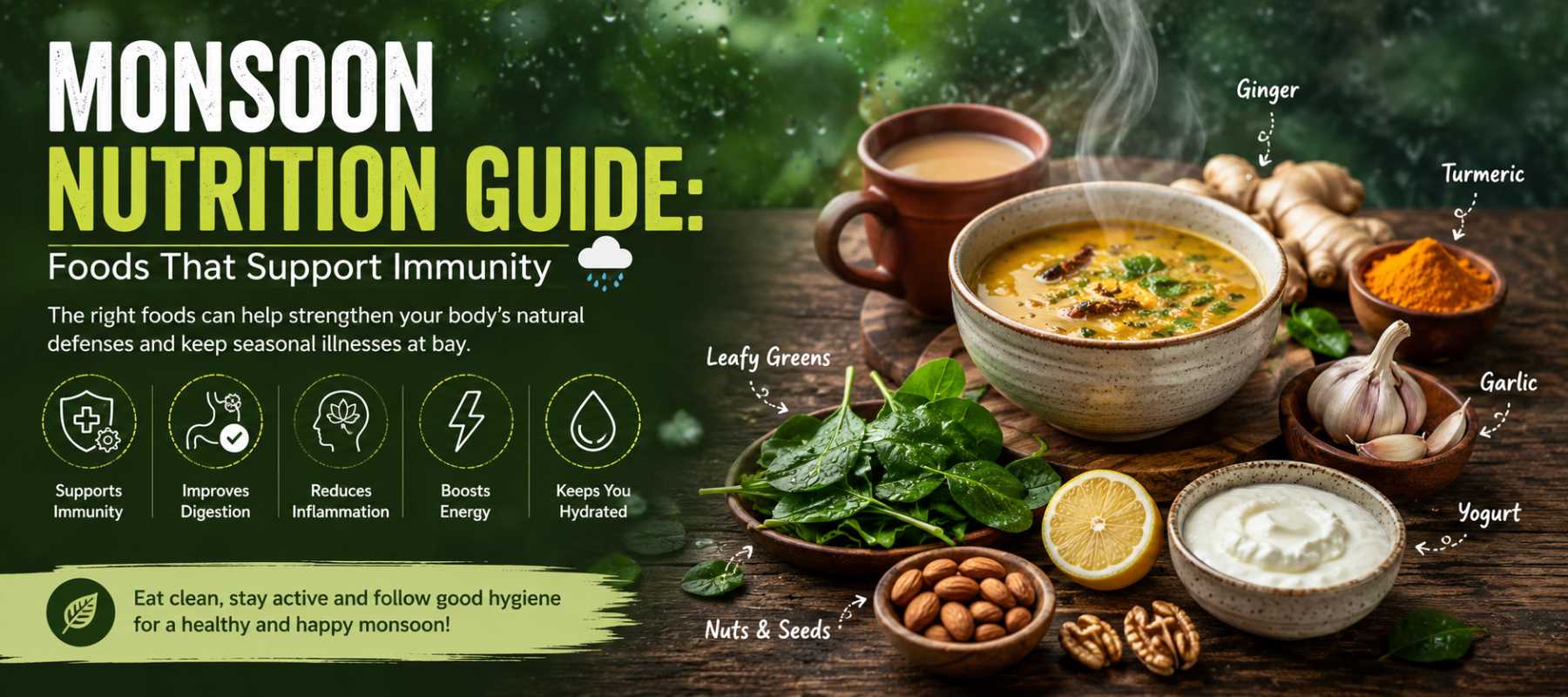
The arrival of the monsoon brings cooler temperatures, refreshing rains, and relief from the scorching summer heat. However, the season also creates an environment where infections, digestive problems, and seasonal illnesses become more common. Increased humidity, fluctuating weather conditions, and greater exposure to bacteria and viruses can place extra stress on the body’s natural defense system.
While no single food can guarantee protection from illness, following a balanced and nutrient-rich diet can help support immune function and overall well-being throughout the rainy season.
Why Healthy Eating Matters During the Monsoon
A strong immune system depends on a steady supply of essential nutrients, including vitamins, minerals, antioxidants, proteins, and healthy fats. During the monsoon, paying attention to nutrition becomes especially important, as the body may be more susceptible to infections and digestive discomfort.
A well-balanced diet can help:
- Support normal immune function
- Improve gut health
- Combat oxidative stress
- Sustain energy levels
- Assist recovery from seasonal ailments
1. Citrus Fruits: A Natural Source of Vitamin C
Vitamin C is well known for its role in supporting immune health. Citrus fruits are among the easiest and most delicious ways to increase your intake of this important nutrient.
Include fruits such as:
- Oranges
- Sweet lime (mosambi)
- Lemons
- Grapefruit
These fruits also provide antioxidants that contribute to overall wellness and vitality.
2. Ginger: A Monsoon Kitchen Essential
Ginger has been valued for centuries in traditional diets and herbal remedies. Rich in natural bioactive compounds, it can be a comforting addition to meals and beverages during the rainy season.
Easy ways to enjoy ginger:
- Fresh ginger tea
- Homemade soups
- Stir-fried vegetables
- Herbal drinks
Its naturally warming qualities make it especially appealing when temperatures drop.
3. Garlic: A Flavorful Wellness Booster
Garlic is more than just a culinary ingredient. It contains naturally occurring sulfur compounds that contribute to its unique flavor and nutritional value.
You can incorporate garlic into:
- Lentil dishes
- Soups and broths
- Vegetable curries
- Homemade chutneys and sauces
Regularly including garlic in your meals can help improve overall dietary quality.
4. Yogurt and Fermented Foods for a Healthy Gut
A large portion of the immune system is closely connected to gut health. Fermented foods can help maintain a balanced gut microbiome, which plays an important role in overall wellness.
Consider adding:
- Fresh yogurt (curd)
- Buttermilk
- Fermented batters
- Traditional fermented foods
Always choose fresh, hygienically prepared products, particularly during the monsoon months.
5. Protein-Rich Foods to Support Immune Health
Protein is essential for building and maintaining immune cells, enzymes, and antibodies. Ensuring adequate protein intake can help your body function at its best.
Nutritious protein sources include:
- Lentils and pulses
- Chickpeas
- Beans
- Eggs
- Fish
- Lean poultry
- Tofu and paneer
Try to include a protein source in every main meal.
6. Seasonal Vegetables and Leafy Greens
Vegetables are packed with vitamins, minerals, fiber, and antioxidants that support overall health and immunity.
Excellent choices for the monsoon season include:
- Spinach
- Fenugreek leaves
- Amaranth leaves
- Bottle gourd
- Ridge gourd
- Carrots
- Bell peppers
Wash vegetables thoroughly and cook them properly before consumption.
7. Turmeric: The Golden Ingredient
Turmeric is a staple spice in many households and is widely appreciated for its antioxidant-rich compound, curcumin.
Simple ways to use turmeric:
- Vegetable curries
- Dal and lentil preparations
- Warm milk beverages
- Soups and stews
Pairing turmeric with black pepper may help enhance the absorption of curcumin.
8. Nuts and Seeds for Daily Nutrition
Nuts and seeds provide healthy fats, protein, vitamin E, zinc, and other nutrients that support normal immune function.
Great options include:
- Almonds
- Walnuts
- Pumpkin seeds
- Sunflower seeds
- Flaxseeds
A small handful each day can be a nutritious addition to your diet.
9. Warm Soups and Nourishing Broths
Warm meals can be particularly comforting during rainy weather while also helping maintain hydration.
Try incorporating:
- Vegetable soups
- Lentil soups
- Clear broths
- Tomato soup
- Mixed vegetable stews
These dishes are also an excellent way to increase your vegetable intake.
10. Don’t Forget to Stay Hydrated
Many people unintentionally reduce their water intake during cooler weather. However, staying hydrated remains essential for overall health and bodily functions.
Healthy hydration options include:
- Water
- Coconut water
- Herbal teas
- Clear soups
- Fresh lemon water
Limiting sugary drinks and drinking fluids regularly throughout the day can help maintain proper hydration.
Foods to Limit During the Monsoon
Certain foods may be more prone to contamination during the rainy season and should be consumed with caution.
It’s wise to limit:
- Street food from unhygienic vendors
- Pre-cut fruits left uncovered
- Raw salads from uncertain sources
- Deep-fried foods in excess
- Stale or improperly stored leftovers
Maintaining good food hygiene is just as important as choosing nutritious foods.
Building a Balanced Monsoon Meal
A simple and wholesome monsoon meal may include:
- Whole grains such as roti or brown rice
- Protein-rich foods like lentils, beans, eggs, or fish
- Cooked seasonal vegetables
- Yogurt or buttermilk
- Fresh fruit as a healthy dessert
This balanced combination provides a variety of nutrients that support overall health, energy, and immunity throughout the rainy season.