

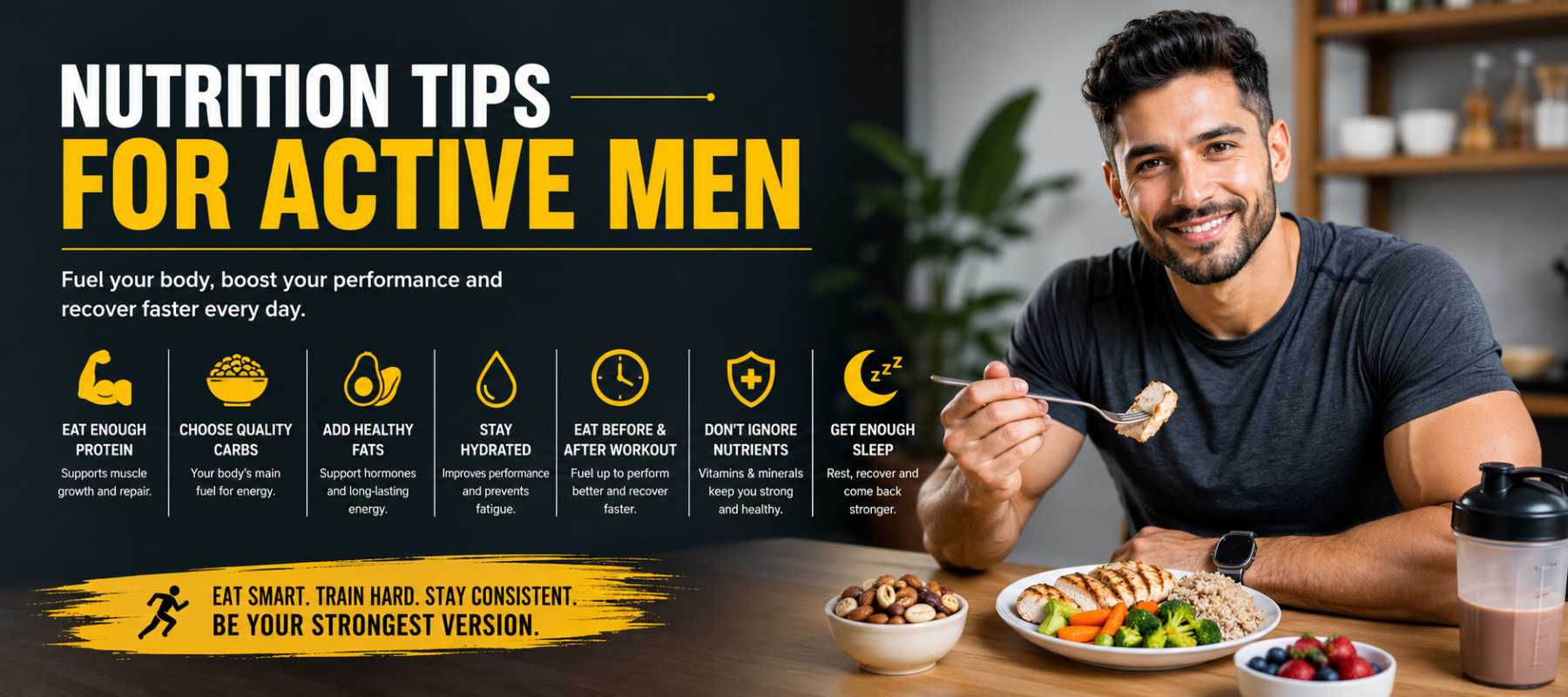
Whether you’re lifting weights, playing sports, running, cycling, or simply staying physically active, your body needs the right nutrition to perform at its best. Exercise places greater demands on your muscles, energy stores, and recovery systems, making a balanced diet essential for maintaining strength, endurance, and overall health.
While regular training is important, what you eat before, during, and after physical activity can significantly influence your performance and recovery. By making smart food choices and following healthy eating habits, active men can support muscle growth, sustain energy levels, and reduce the risk of fatigue and injury.
1. Make Protein a Daily Priority
Protein is essential for repairing muscle tissue, supporting recovery, and maintaining lean muscle mass. Since exercise naturally causes small amounts of muscle breakdown, consuming adequate protein throughout the day helps your body rebuild and strengthen those muscles.
Good protein sources include:
- Eggs
- Chicken
- Fish
- Greek yogurt
- Paneer
- Tofu
- Lentils and beans
Rather than eating all your protein in one meal, try spreading your intake evenly across breakfast, lunch, dinner, and snacks.
2. Choose Carbohydrates That Provide Lasting Energy
Carbohydrates are your body’s preferred source of energy, especially during moderate to high-intensity exercise. They replenish glycogen stores in your muscles, helping you maintain stamina and perform at your best.
Choose nutrient-rich carbohydrates such as:
- Oats
- Brown rice
- Whole-grain bread
- Whole wheat roti
- Sweet potatoes
- Quinoa
- Fresh fruits
Limiting highly processed and sugary foods while focusing on complex carbohydrates can help provide more consistent energy throughout the day.
3. Include Healthy Fats in Your Diet
Healthy fats are often overlooked but play an important role in hormone production, nutrient absorption, and overall health. They also provide a concentrated source of energy for longer periods of activity.
Excellent sources of healthy fats include:
- Almonds and walnuts
- Chia and flaxseeds
- Avocados
- Olive oil
- Fatty fish
Including moderate amounts of healthy fats in your meals can help support both performance and long-term wellness.
4. Stay Properly Hydrated
Hydration is just as important as nutrition. Even mild dehydration can negatively affect endurance, concentration, and physical performance.
To stay hydrated:
- Drink water consistently throughout the day.
- Increase fluid intake before, during, and after exercise.
- Replace electrolytes after prolonged or intense workouts, particularly if you’ve been sweating heavily.
A simple way to monitor hydration is by checking that your urine is pale yellow, which usually indicates adequate fluid intake.
5. Fuel Your Workouts the Right Way
Eating at the right time helps maximize both performance and recovery.
Before Exercise
Consume a light meal or snack containing carbohydrates and a moderate amount of protein about one to two hours before your workout.
Examples include:
- Oatmeal with milk
- A banana with peanut butter
- Whole-grain toast with eggs
- Yogurt with fruit
After Exercise
Within a couple of hours after training, aim for a meal that combines protein and carbohydrates to replenish energy stores and support muscle recovery.
Good post-workout meals include:
- Grilled chicken with rice
- Paneer with whole wheat roti
- Greek yogurt with fruit and oats
- Fish with sweet potatoes
6. Don’t Overlook Essential Vitamins and Minerals
Micronutrients are vital for energy production, muscle function, bone health, and immune support. Active individuals may have higher nutritional requirements due to increased physical demands.
Pay particular attention to nutrients such as:
- Vitamin D for muscle strength and bone health
- Magnesium for muscle function and recovery
- Zinc for immune health and normal hormone function
- Iron for oxygen transport and energy production
- Calcium for strong bones and muscle contraction
A varied, balanced diet is the best way to obtain these nutrients.
7. Prioritize Quality Sleep
Nutrition and exercise alone aren’t enough if your body doesn’t have time to recover. Sleep is when muscle repair, hormone regulation, and tissue recovery occur.
Aim for 7 to 9 hours of quality sleep each night to support recovery, improve performance, and maintain overall health.
Sample Daily Meal Plan for Active Men
Breakfast
- Oatmeal with milk, berries, and eggs
Mid-Morning Snack
- Greek yogurt with mixed nuts
Lunch
- Brown rice, grilled chicken or paneer, and vegetables
Pre-Workout Snack
- Banana with peanut butter
Post-Workout Meal
- Lean protein with rice or sweet potatoes
Dinner
- Fish, tofu, or legumes with vegetables and whole grains