

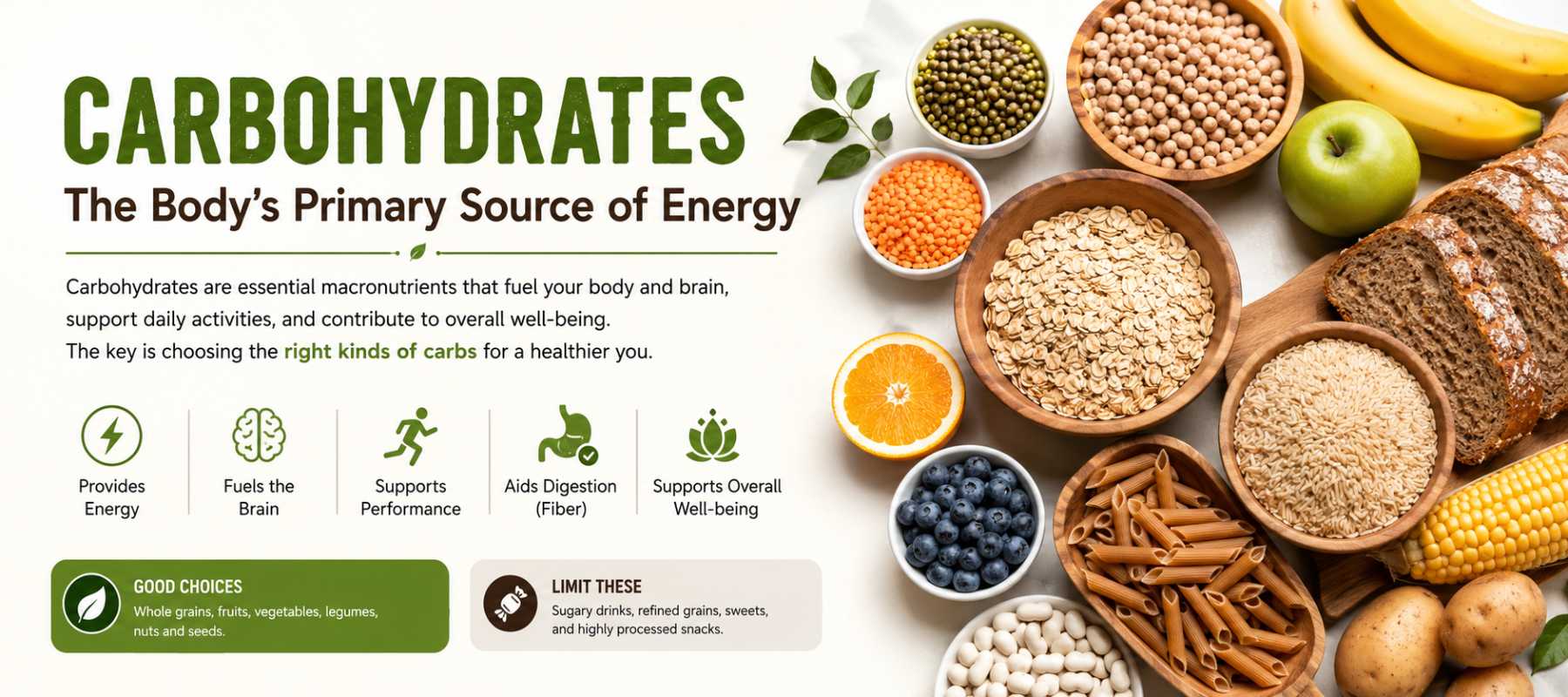
Carbohydrates are one of the body’s essential macronutrients, along with protein and fats. They serve as the primary source of energy for daily activities, exercise, and many important bodily functions. Although carbohydrates are often criticized in popular diet trends, they remain a vital component of a healthy and balanced diet.
This guide explains what carbohydrates are, the different forms they come in, their health benefits, common misconceptions, and practical tips for making healthier carbohydrate choices.
What Are Carbohydrates?
Carbohydrates are nutrients made up of carbon, hydrogen, and oxygen. They are naturally present in many foods such as fruits, vegetables, grains, legumes, and dairy products.
After consumption, carbohydrates are converted into glucose, which provides energy for cells throughout the body. Any excess glucose is stored as glycogen in the liver and muscles, where it can be used later when energy demands increase.
Different Types of Carbohydrates
Simple Carbohydrates
Simple carbohydrates are made up of one or two sugar molecules and are quickly absorbed by the body.
Common sources include:
- Sugar
- Honey
- Fruit juices
- Soft drinks
- Candies and sweets
These carbohydrates can provide quick energy but may also lead to rapid fluctuations in blood sugar levels when consumed in excess.
Complex Carbohydrates
Complex carbohydrates contain longer chains of sugar molecules, making them slower to digest and absorb.
Examples include:
- Oats
- Brown rice
- Whole-grain bread
- Sweet potatoes
- Beans and lentils
These foods typically provide steady energy and are rich in nutrients such as vitamins, minerals, and dietary fiber.
Dietary Fiber
Fiber is a unique type of carbohydrate that is not fully digested by the body. It plays an important role in digestive health and helps promote satiety.
Good sources of fiber include:
- Fruits
- Vegetables
- Whole grains
- Legumes
- Nuts and seeds
Key Benefits of Carbohydrates
1. Provides Energy
Carbohydrates are the body’s preferred fuel source. They power everything from routine daily tasks to intense physical activity.
2. Supports Exercise Performance
The body stores carbohydrates as glycogen in the muscles. These energy reserves are especially important during workouts, helping support endurance, strength, and recovery.
3. Promotes Brain Function
Glucose is the brain’s primary energy source. Adequate carbohydrate intake can help maintain focus, concentration, memory, and mental performance.
4. Helps Protect Muscle Tissue
When carbohydrate intake is sufficient, the body relies less on protein for energy. This allows protein to be used more effectively for muscle maintenance and recovery.
5. Encourages Healthy Digestion
Fiber-rich carbohydrate foods support digestive function, improve gut health, and contribute to regular bowel movements.
Healthy Sources of Carbohydrates
Choosing nutrient-dense carbohydrate foods can help maximize health benefits.
Recommended Sources
- Oats
- Quinoa
- Brown rice
- Sweet potatoes
- Fresh fruits
- Vegetables
- Beans
- Lentils
- Whole-grain bread
Foods to Consume in Moderation
- Sugary beverages
- Candy and sweets
- Refined baked goods
- Processed snack foods
- Foods with high amounts of added sugar
While these foods can be enjoyed occasionally, they should not make up the majority of carbohydrate intake.
Carbohydrates and Weight Control
A common belief is that carbohydrates are responsible for weight gain. However, body weight is primarily influenced by overall calorie balance rather than a single nutrient.
In fact, carbohydrate-rich whole foods may support weight management by:
- Increasing feelings of fullness
- Providing sustained energy
- Supporting physical activity
- Delivering essential nutrients
Focusing on the quality and portion size of carbohydrates is generally more beneficial than eliminating them entirely.
Common Carbohydrate Myths
Myth 1: Carbohydrates Cause Weight Gain
Reality: Consuming more calories than the body needs can lead to weight gain, regardless of whether those calories come from carbohydrates, protein, or fats.
Myth 2: Everyone Should Follow a Low-Carb Diet
Reality: Nutritional needs vary between individuals. Many people achieve excellent health and performance while consuming a balanced amount of carbohydrates.
Myth 3: All Carbohydrates Are Bad
Reality: Whole grains, fruits, vegetables, and legumes are highly nutritious foods that provide important vitamins, minerals, antioxidants, and fiber.
Myth 4: Eating Carbs at Night Is Harmful
Reality: Overall daily food intake matters far more than the specific time carbohydrates are consumed.
How Much Carbohydrate Do You Need?
Carbohydrate requirements differ based on several factors, including:
- Age
- Physical activity level
- Fitness goals
- Training intensity
- Overall health status
People who exercise regularly or participate in sports generally require more carbohydrates to support their energy needs and recovery.
Smart Tips for Choosing Carbohydrates
- Focus on whole, minimally processed foods.
- Eat a variety of fruits and vegetables every day.
- Select whole grains instead of refined grains.
- Combine carbohydrates with protein and healthy fats for balanced meals.
- Include fiber-rich foods regularly.
- Reduce intake of foods high in added sugars.