

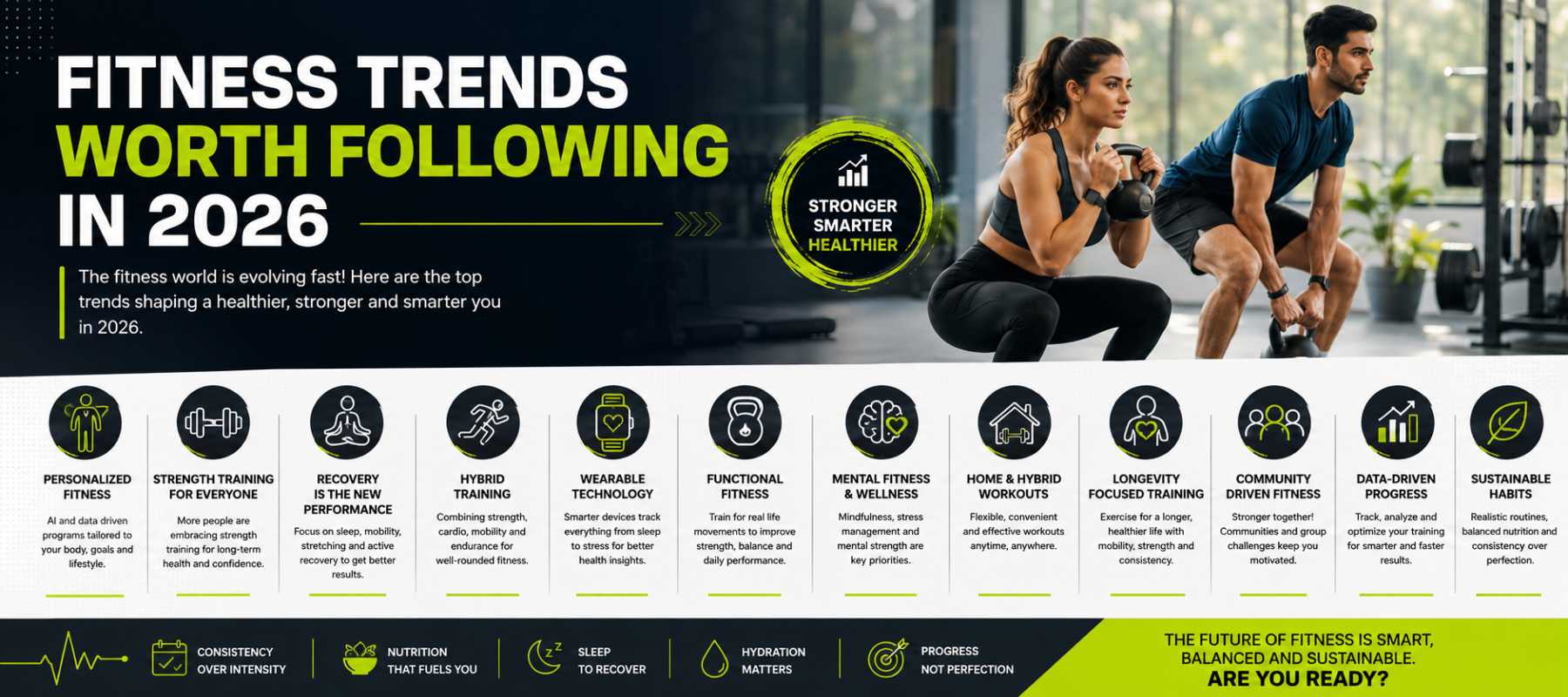
The world of fitness is constantly changing, driven by advancements in technology, scientific research, and evolving lifestyle preferences. In 2026, the emphasis is moving beyond crash diets and intense workout challenges toward sustainable routines, personalized training, and holistic wellness. Understanding these emerging trends can help individuals build healthier habits and achieve long-term fitness success.
1. Customized Fitness Experiences
Generic workout plans are gradually being replaced by personalized training programs designed around an individual’s goals, fitness level, and lifestyle. Modern fitness apps and wearable devices now offer tailored recommendations by analyzing activity, recovery, and performance data.
Key Benefits
- More effective workouts
- Lower risk of injury
- Improved consistency and motivation
2. Strength Training Goes Mainstream
Strength training has become a fundamental part of fitness for people of all ages. Beyond building muscle, resistance training supports metabolic health, bone strength, and overall physical function.
Advantages
- Promotes healthy aging
- Improves everyday strength
- Supports a balanced body composition
3. Prioritizing Recovery
Recovery is no longer viewed as optional. Fitness enthusiasts are recognizing the importance of rest, mobility work, and recovery practices to improve performance and prevent overtraining.
Popular Recovery Strategies
- Stretching routines
- Foam rolling
- Quality sleep
- Massage and mobility therapy
- Recovery monitoring technology
4. The Rise of Hybrid Training
Hybrid training combines multiple fitness disciplines to create a more balanced approach to health and performance. This method develops strength, endurance, flexibility, and cardiovascular fitness simultaneously.
Common Combinations
- Running and weight training
- Yoga and resistance exercises
- Functional training and cycling
5. Smarter Wearable Technology
Fitness wearables continue to evolve, providing detailed insights into sleep patterns, heart rate, recovery, calorie burn, and training intensity. These tools help users make informed decisions about their health and workouts.
Benefits
- Accurate progress monitoring
- Better training decisions
- Personalized wellness insights
6. Functional Movement Training
Functional fitness emphasizes exercises that replicate real-life movements. The goal is to improve strength, mobility, balance, and coordination for better daily performance.
Popular Exercises
- Squats
- Lunges
- Deadlifts
- Kettlebell exercises
- Loaded carries
Functional training is particularly valuable for maintaining mobility and reducing the likelihood of injuries.
7. Mental Wellness Meets Fitness
Fitness is increasingly being viewed as a tool for supporting mental health. Mindfulness practices, breathing techniques, and stress-management strategies are becoming common additions to workout programs.
Positive Outcomes
- Improved focus and concentration
- Better stress management
- Enhanced workout performance
- Greater overall well-being
8. Flexible Home and Hybrid Workouts
Convenience remains a major factor in fitness adherence. Many people are combining gym sessions with home workouts, creating flexible routines that fit their schedules.
Popular Home Fitness Equipment
- Resistance bands
- Adjustable dumbbells
- Smart fitness devices
- Virtual coaching platforms
9. Training for Longevity
More individuals are shifting their focus from short-term appearance goals to long-term health and vitality. Longevity-based fitness prioritizes sustainable exercise habits that support healthy aging.
Essential Components
- Strength development
- Cardiovascular fitness
- Mobility training
- Recovery management
- Nutritious eating habits
10. Community-Driven Fitness
Fitness communities, group classes, and online challenges continue to play an important role in keeping people engaged and accountable.
Benefits of Community Support
- Encourages regular participation
- Builds accountability
- Makes fitness more enjoyable
11. Performance Tracking Through Data
Data-driven fitness is helping people train smarter. By monitoring key health and performance indicators, individuals can optimize workouts while minimizing the risk of overtraining.
Frequently Tracked Metrics
- Resting heart rate
- Sleep quality and duration
- Recovery scores
- Training volume
- Daily movement levels
12. Sustainable Lifestyle Habits
Perhaps the most significant trend of 2026 is the move toward realistic and sustainable fitness practices. Instead of seeking rapid transformations, people are focusing on habits that can be maintained for the long term.
Sustainable Approaches
- Regular physical activity
- Balanced nutrition
- Consistent sleep patterns
- Effective stress management
- Achievable fitness goals