

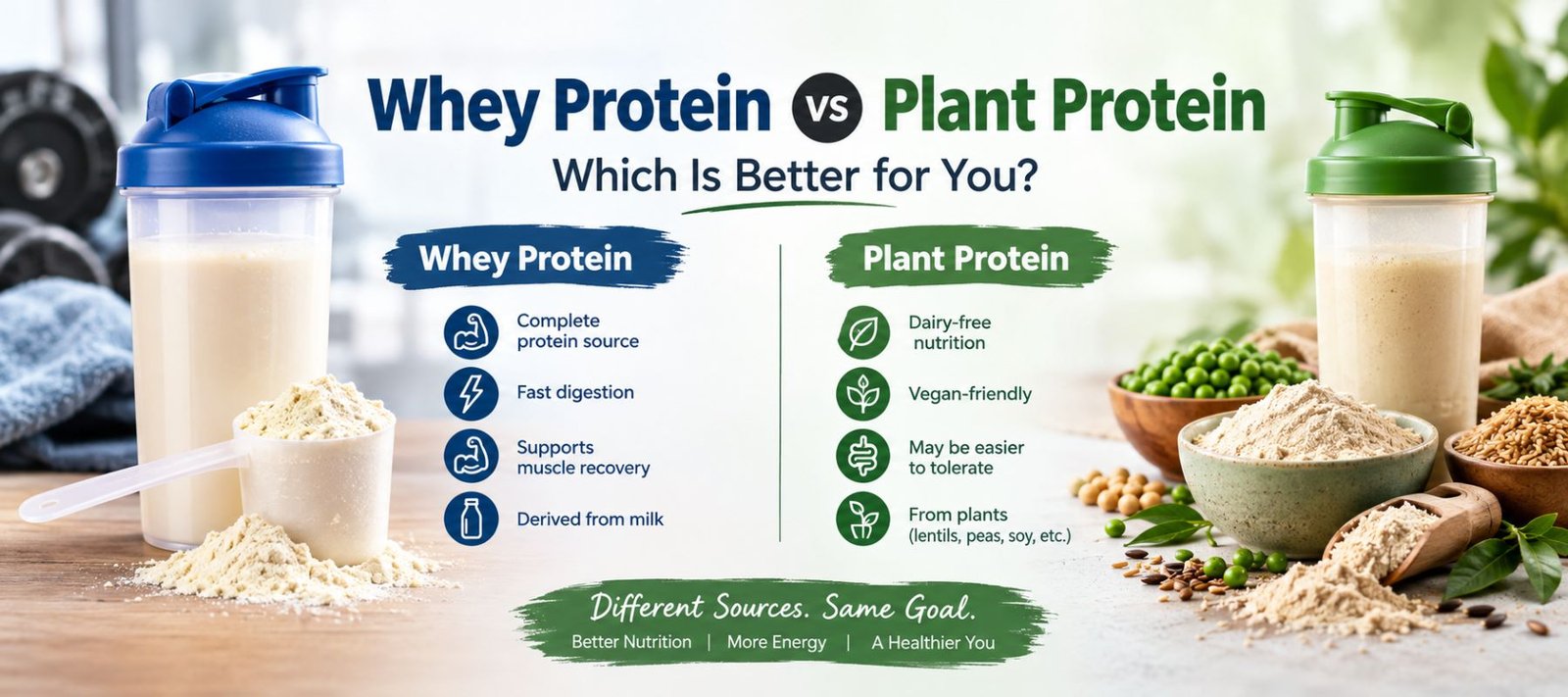
Protein plays an important role in muscle development, recovery, and overall health. Whether you’re working towards building strength, maintaining a healthy weight, or improving your fitness routine, getting enough protein is essential.
Two widely used options are whey protein and plant-based protein. While both can help meet your daily protein needs, they differ in their sources, nutritional composition, and suitability for different diets.
Let’s take a closer look at how these protein sources compare and how to choose the one that suits your needs.
Understanding Whey Protein
Whey protein is obtained from milk during the cheese-making process. It is considered a high-quality protein because it contains all nine essential amino acids required by the body.
Due to its amino acid profile and convenient digestion, whey protein is a popular choice among fitness enthusiasts and athletes.
Key Benefits of Whey Protein
- Complete nutrition: Provides all nine essential amino acids.
- Muscle development: Supports muscle protein synthesis when combined with resistance training.
- Workout recovery: Helps meet the body’s protein requirements after exercise.
- Convenience: Offers a simple way to increase daily protein intake.
- High leucine content: Contains an amino acid important for muscle protein synthesis.
Whey protein may be suitable for people who consume dairy and want a convenient protein source. Those with lactose intolerance may find whey isolate easier to tolerate, while anyone with a milk allergy should avoid whey.
Understanding Plant-Based Protein
Plant protein comes from sources such as peas, soybeans, rice, lentils, and other legumes or grains. Protein powders may contain one plant source or a blend designed to provide a balanced amino acid profile.
Plant-based protein is a popular option for people following vegan or vegetarian diets and those who prefer to avoid dairy.
Key Benefits of Plant Protein
- Dairy-free alternative: Suitable for people who avoid dairy ingredients.
- Plant-based nutrition: Fits into vegan and vegetarian lifestyles.
- Flexible protein sources: Available in pea, soy, rice, and blended formulations.
- Fitness support: Can contribute to muscle maintenance, development, and recovery.
- Dietary variety: Complements protein-rich plant foods such as beans, lentils, tofu, and nuts.
The nutritional quality of plant protein varies by source. Choosing a product with sufficient protein and a suitable essential amino acid profile can help support your fitness goals.
Whey Protein vs Plant Protein: What Sets Them Apart?
| Comparison | Whey Protein | Plant Protein |
|---|---|---|
| Origin | Milk | Plants and legumes |
| Amino acid profile | Complete protein | Depends on the source or blend |
| Leucine content | Generally high | Varies by source |
| Digestion | Usually rapid | Varies by formulation |
| Dietary suitability | Not vegan | Often vegan-friendly |
| Dairy-free | No | Usually yes |
| Muscle support | Effective with adequate nutrition and training | Also effective with adequate nutrition and training |
Which Protein Is Better for Building Muscle?
Both whey and plant protein can help support muscle growth when paired with resistance training and sufficient daily protein intake.
Whey protein is naturally rich in essential amino acids, including leucine, which plays a key role in stimulating muscle protein synthesis.
Plant protein can also be effective, particularly when the source, serving size, and overall amino acid intake are appropriate. Blends such as pea and rice protein can provide complementary amino acid profiles.
Ultimately, muscle development depends on consistent training, adequate nutrition, recovery, and total daily protein intake—not simply the type of protein powder you choose.
Which Protein Is Better for Digestion?
Digestive comfort varies from person to person.
Whey concentrate contains lactose, which may cause discomfort in individuals with lactose intolerance. Whey isolate generally contains less lactose but remains a milk-derived product.
Plant protein avoids lactose, although certain ingredients, sweeteners, or formulations can still cause digestive symptoms in some people.
If digestion is a concern, review the ingredient list and choose a protein source that suits your individual tolerance.
Which Protein Fits a Weight-Management Plan?
Both whey and plant protein can be included in a balanced weight-management routine. Protein contributes to satiety and helps maintain muscle mass, particularly when combined with regular exercise.
When selecting a protein powder, compare its protein content, calories, added sugars, and serving size. Remember that sustainable weight management depends on your overall diet, activity levels, and lifestyle habits.
How to Choose the Right Protein for Your Lifestyle
The right choice depends on your dietary preferences, fitness objectives, and individual needs.
Whey protein may suit you if:
- You consume dairy products.
- You want a complete protein with a high leucine content.
- Your primary goals include supporting muscle growth and exercise recovery.
Plant protein may suit you if:
- You follow a vegan or vegetarian diet.
- You prefer dairy-free nutrition.
- You want a protein supplement derived from plants.
Before purchasing any protein supplement, check the nutrition label, ingredient quality, allergen information, and protein content per serving.
Final Thoughts
Whey protein and plant protein both offer practical ways to support your daily nutritional needs. Whey provides a high-quality dairy-derived protein, while plant protein offers flexibility for people seeking plant-based alternatives.
Neither option is universally best for everyone. Your dietary preferences, digestive tolerance, training routine, and overall nutritional intake should guide your decision.
Choose a protein source that fits your lifestyle and helps you maintain a consistent, balanced approach to nutrition.
Disclaimer: This article is intended for general educational purposes and should not replace personalised advice from a qualified healthcare professional or registered dietitian.