


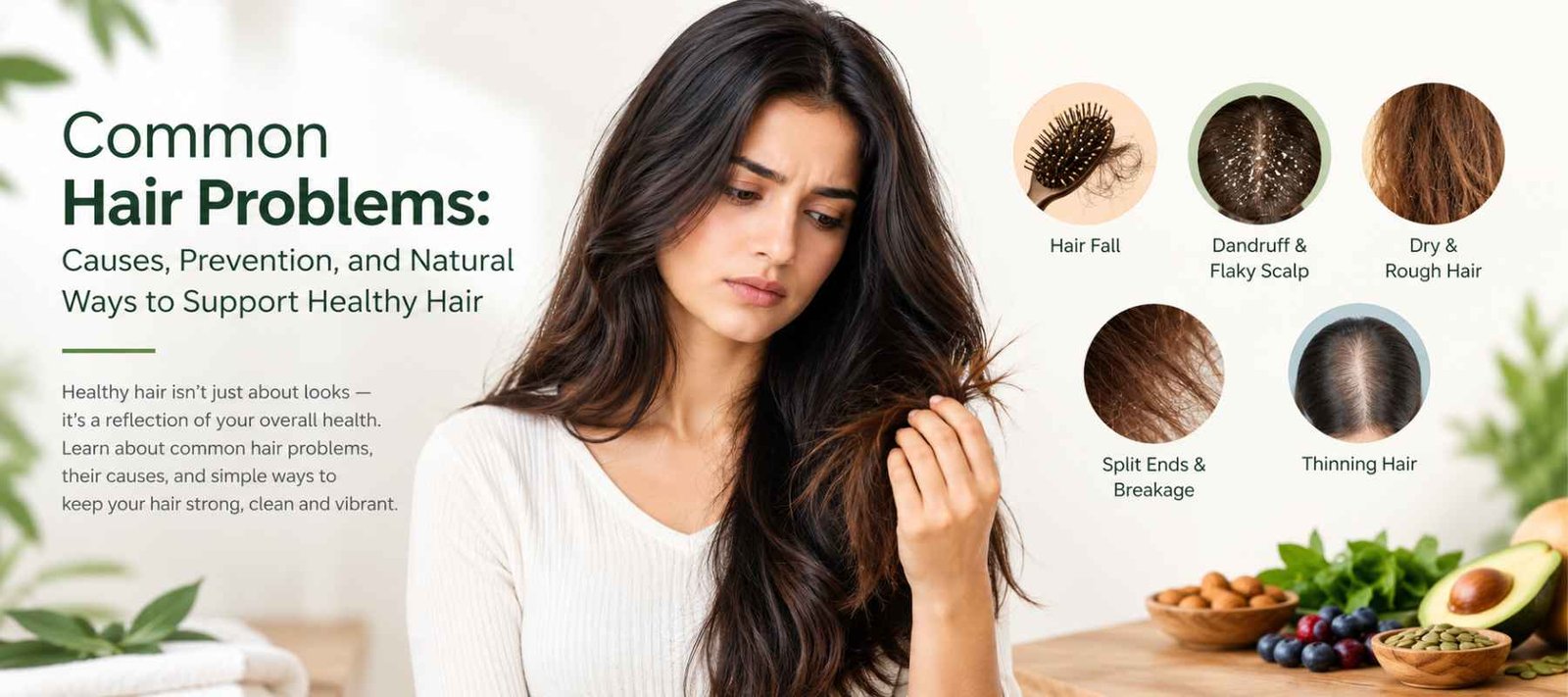
Hair plays an important role in how we look and feel, which is why problems such as hair fall, dandruff, dryness, frizz, and thinning can be frustrating. While occasional hair shedding is normal, noticeable or ongoing changes in hair and scalp health may be influenced by nutrition, lifestyle, stress, genetics, hormonal changes, or everyday hair-care habits.
The good news is that understanding what may be affecting your hair can help you build a better routine and take steps toward maintaining healthier-looking hair.
5 Common Hair Problems You Should Know About
1. Hair Fall and Excessive Shedding
Finding a few strands of hair on your pillow, comb, or shower floor is usually normal. However, excessive or persistent shedding can have several possible causes.
Stress, nutritional deficiencies, hormonal changes, genetics, illness, and certain medications may contribute to increased hair fall. Tight hairstyles and frequent chemical or heat treatments can also contribute to hair breakage.
A balanced diet, gentle hair care, and avoiding unnecessary stress on the hair can help support overall hair health.
2. Dandruff and an Itchy Scalp
Dandruff is one of the most common scalp concerns. It can appear as white or yellowish flakes and may be accompanied by itching or scalp irritation.
An oily scalp, dry skin, buildup from hair products, and certain scalp conditions can contribute to flaking. Regular scalp cleansing and using a suitable anti-dandruff shampoo may help manage mild dandruff.
Try to avoid repeatedly scratching the scalp, as this can increase irritation.
3. Dry, Frizzy, and Rough Hair
Hair can become dry and difficult to manage when it loses moisture. Frequent exposure to heat, harsh chemical treatments, excessive washing, and environmental factors can contribute to dryness and frizz.
Using a gentle shampoo and conditioner, reducing heat styling, and avoiding very hot water can help maintain softer, more manageable hair.
4. Split Ends and Hair Breakage
Split ends are a sign that the hair shaft has become damaged. Excessive brushing, heat styling, bleaching, coloring, and chemical treatments can make hair more prone to breakage.
To reduce damage, handle wet hair gently, avoid excessive heat, and consider trimming damaged ends regularly. Conditioning treatments can also help improve the appearance and feel of dry or damaged hair.
5. Thinning Hair
Thinning can develop gradually and may become more noticeable around the hairline, crown, or parting. Genetics and aging are common factors, but hormonal changes, nutritional deficiencies, certain health conditions, and medications may also play a role.
If you experience sudden or progressive thinning, identifying the underlying cause is more useful than simply changing hair products. A dermatologist or qualified healthcare professional can help assess persistent hair changes.
What Causes Hair Problems?
There isn’t always one single reason behind a hair concern. Several factors can affect the scalp and hair at the same time.
Nutrition: Hair growth depends on adequate nutrition, including sufficient protein and essential vitamins and minerals.
Stress: Significant physical or emotional stress can sometimes lead to temporary increased hair shedding.
Hormonal changes: Changes associated with pregnancy, menopause, thyroid conditions, or other hormonal factors may affect hair growth and shedding.
Genetics: Some types of hair loss and thinning can run in families.
Hair-care habits: Frequent straightening, curling, coloring, bleaching, and tight hairstyles can weaken hair or contribute to breakage.
Scalp health: Persistent dandruff, irritation, inflammation, or other scalp conditions can affect hair quality and shedding.
Everyday Tips for Better Hair Care
A few simple habits can make a difference in maintaining healthy-looking hair.
Focus on Your Diet
Include a variety of protein-rich foods, vegetables, fruits, whole grains, nuts, seeds, and other nutrient-rich foods in your meals. Avoid restrictive diets that may leave you short of essential nutrients.
Keep Your Scalp Clean
Choose a shampoo appropriate for your scalp and hair type. Regular cleansing can help remove excess oil, sweat, dead skin cells, and product buildup.
Reduce Heat Damage
Frequent use of straighteners, curling irons, and high-heat blow-drying can weaken the hair shaft. Whenever possible, reduce the temperature and frequency of heat styling.
Avoid Excessive Chemical Treatments
Frequent coloring, bleaching, relaxing, or other chemical processes can make hair dry and fragile. Give your hair enough time between treatments and follow proper after-care.
Handle Hair Gently
Wet hair is more vulnerable to breakage. Avoid aggressive towel drying and harsh brushing. Use a wide-tooth comb or gently detangle the hair, starting from the ends.
Protect Your Hair From Environmental Stress
Sun exposure, pollution, dust, and dry weather can affect the appearance and texture of hair. Covering your hair when exposed to harsh conditions and maintaining adequate moisture can help protect it.
When Should You Pay Attention to Hair Changes?
Not every hair problem requires medical attention. However, sudden or severe hair loss, bald patches, persistent scalp itching, redness, pain, scaling, or rapidly progressing thinning should not be ignored.
These symptoms can sometimes be associated with an underlying condition, so professional evaluation may help determine the cause and appropriate treatment.
Healthy Hair Starts With Consistent Care
There is no single solution that works for every hair concern. Hair health can be influenced by nutrition, genetics, hormones, lifestyle, scalp condition, and daily hair-care practices.
Rather than focusing only on the appearance of your hair, pay attention to your scalp, diet, styling habits, and overall well-being. A consistent and gentle routine can help maintain stronger, healthier-looking hair over time.
If hair fall or scalp problems continue despite making changes to your routine, consider consulting a dermatologist or healthcare professional to understand the underlying cause.