


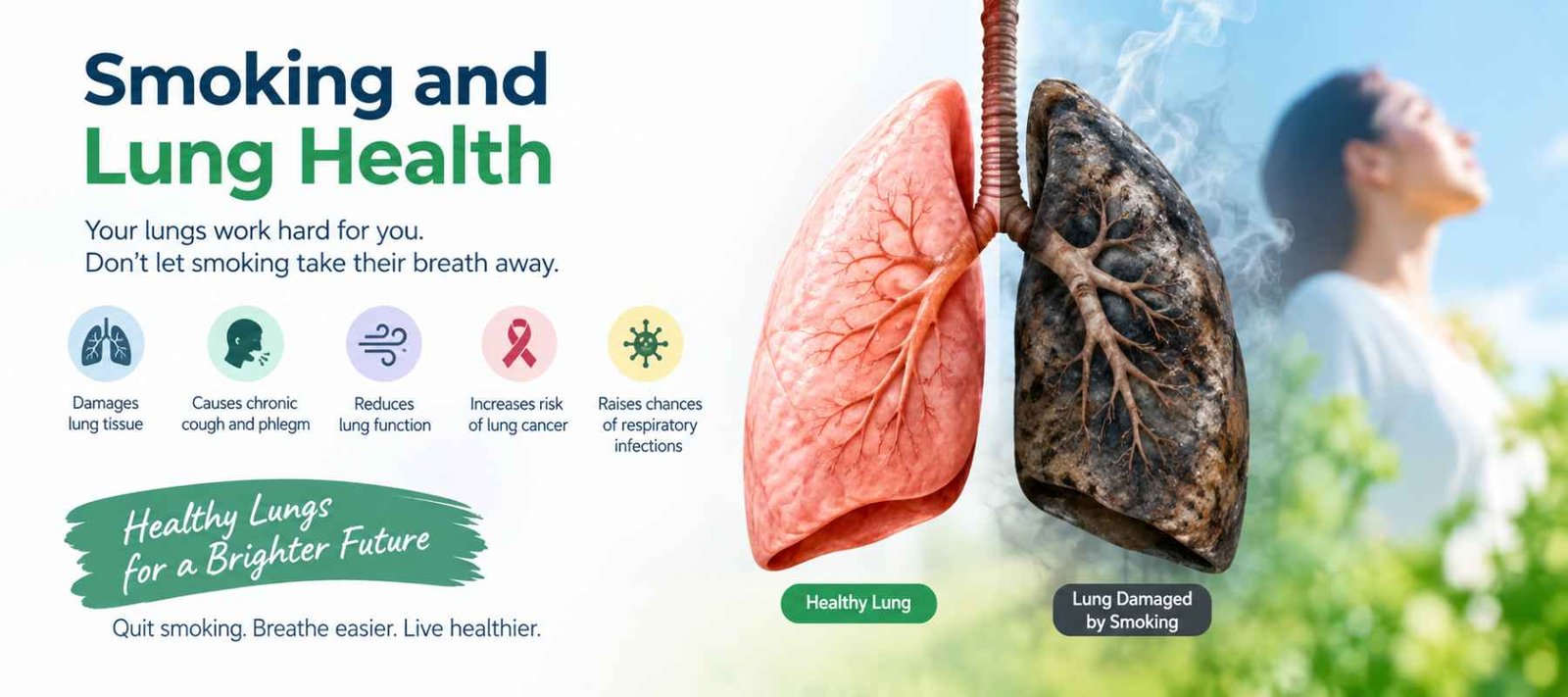
Every breath matters. Our lungs work continuously to deliver oxygen to the body, but smoking can interfere with this essential process. Tobacco smoke contains harmful chemicals that can irritate the airways, damage lung tissue, and increase the risk of serious respiratory conditions.
How Does Smoking Damage Your Lungs?
When tobacco smoke enters the lungs, it exposes delicate lung tissue to toxic substances. Repeated exposure can cause inflammation and gradually weaken the lungs’ natural defenses.
Over time, smoking may contribute to:
- Persistent coughing and excess mucus
- Wheezing and breathing difficulties
- Reduced lung capacity
- Frequent respiratory infections
- Long-term lung damage
Smoking and Lung Cancer Risk
Tobacco smoke contains chemicals that can damage lung cells and increase the risk of lung cancer. The risk generally increases with continued exposure to tobacco smoke.
Avoiding smoking and quitting if you already smoke are important steps toward reducing further exposure to these harmful substances.
Smoking and Chronic Lung Conditions
Long-term smoking is closely associated with chronic obstructive pulmonary disease (COPD). COPD can make it increasingly difficult to move air in and out of the lungs.
Common symptoms can include:
- Ongoing cough
- Shortness of breath
- Wheezing
- Increased mucus production
- Reduced ability to perform physical activities
Your Lungs Have a Natural Defense System
The respiratory system has natural mechanisms that help remove dust, particles, and other unwanted substances. Tiny structures called cilia help move mucus and trapped particles out of the airways.
Smoking can damage these defenses, making it harder for the lungs to clear irritants and maintain healthy respiratory function.
Secondhand Smoke Can Also Harm Lung Health
Lung health can be affected even when someone does not smoke themselves. Breathing secondhand smoke exposes people nearby to harmful chemicals.
Children and people with existing respiratory problems can be particularly vulnerable. Keeping homes, cars, and shared spaces smoke-free can help reduce unnecessary exposure.
Steps to Support Healthier Lungs
Protecting your lungs starts with reducing exposure to tobacco smoke. If you smoke, quitting can help prevent continued damage and provide significant long-term health benefits.
You can also support respiratory health by:
- Avoiding secondhand smoke
- Staying physically active
- Limiting exposure to polluted air
- Following recommended vaccinations
- Paying attention to persistent breathing symptoms
- Seeking professional support when quitting smoking
Listen to Your Lungs
Persistent coughing, unexplained breathlessness, chest pain, wheezing, or coughing up blood should not be ignored. If you experience concerning or ongoing symptoms, consult a healthcare professional for appropriate evaluation.
Your lungs support you with every breath. Protecting them from tobacco smoke is an important part of maintaining better respiratory health.
Quit smoking, protect your lungs, and make every breath count.