


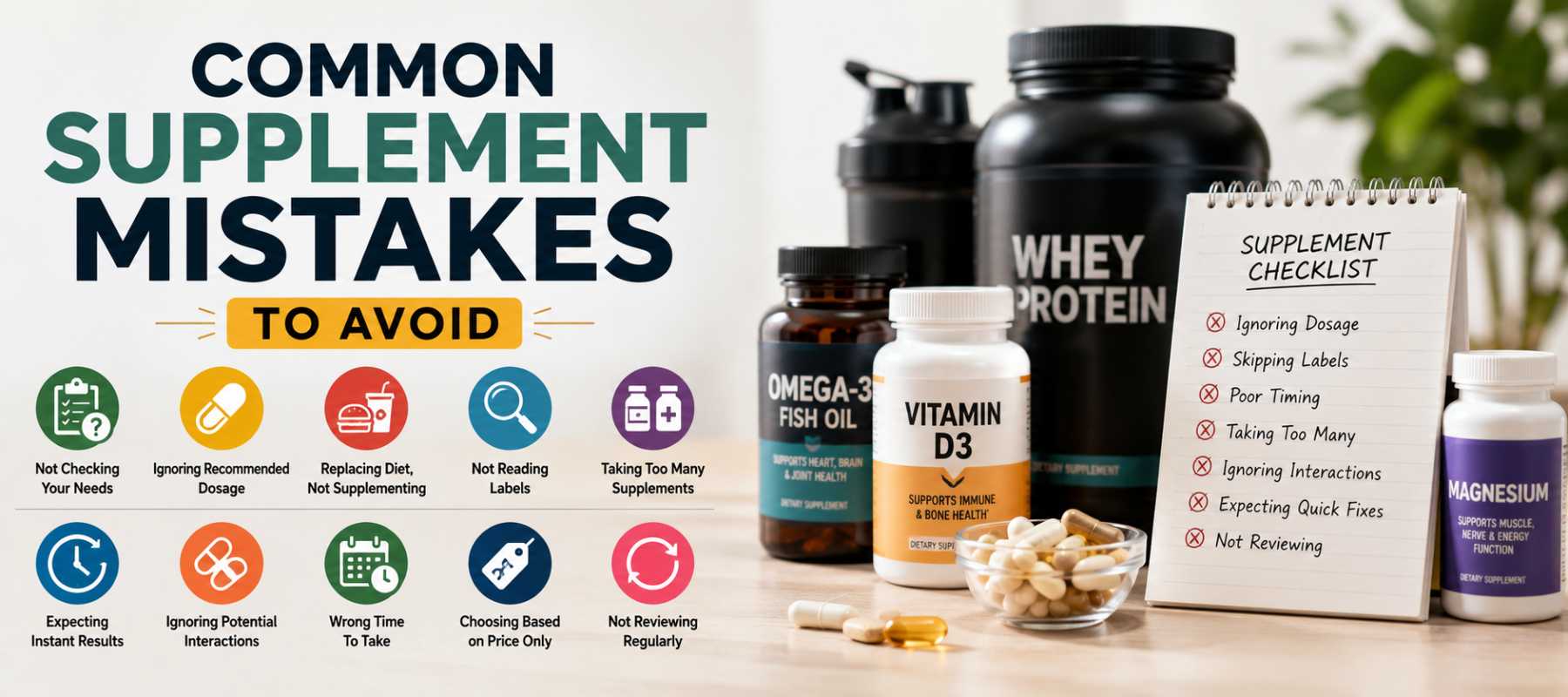
Dietary supplements can play an important role in supporting overall health and helping fill nutritional gaps. However, taking supplements incorrectly can limit their effectiveness, lead to unnecessary expenses, or even cause unwanted side effects. By understanding some of the most common mistakes people make, you can build a smarter and more effective supplement routine.
1. Taking Supplements Without Assessing Your Needs
One of the most common misconceptions is that taking more supplements automatically leads to better health. In reality, nutritional requirements vary from person to person based on factors such as age, diet, lifestyle, and overall health status.
Before adding any supplement to your routine, it’s important to identify your specific needs. Evaluating your diet and consulting a healthcare professional can help determine whether supplementation is necessary and which nutrients may benefit you most.
2. Exceeding the Recommended Dosage
Many people assume that higher doses will deliver faster or more noticeable results. Unfortunately, this isn’t always the case. Taking more than the recommended amount can increase the risk of side effects and may not provide any additional benefits.
To stay safe and achieve the best results, always follow the dosage instructions provided on the product label unless advised otherwise by a qualified healthcare professional.
3. Relying on Supplements Instead of a Balanced Diet
Supplements are intended to complement a healthy diet, not replace it. Whole foods offer a wide range of nutrients, fiber, antioxidants, and naturally occurring compounds that supplements alone cannot fully replicate.
A nutritious, balanced diet should remain the foundation of your wellness routine, with supplements serving as additional support when needed.
4. Overlooking Ingredient Labels
It’s easy to be influenced by marketing claims, but failing to read the ingredient list can be a costly mistake. Some products may contain fillers, additives, allergens, or ingredients that don’t align with your health goals.
Taking the time to review the label can help you understand exactly what you’re consuming and make more informed choices.
5. Combining Multiple Supplements Without a Plan
Using several supplements at once may seem beneficial, but it can sometimes result in overlapping ingredients and excessive nutrient intake. This increases the likelihood of consuming more than your body requires.
Regularly review your supplement regimen and check for duplicate ingredients to avoid unnecessary supplementation.
6. Expecting Instant Results
Unlike medications that may provide quick relief, most supplements work gradually. Nutritional improvements often require consistent use over an extended period before noticeable changes occur.
Being patient and maintaining a regular routine are essential when assessing the effectiveness of any supplement.
7. Ignoring Potential Interactions
Supplements can interact with medications, other supplements, or certain medical conditions. These interactions may affect how nutrients are absorbed or how medications work.
If you’re taking prescription medications or managing a health condition, consult a healthcare professional before introducing new supplements into your routine.
8. Taking Supplements at the Wrong Time
Timing can play a significant role in how well certain nutrients are absorbed. Some supplements are best taken with meals, while others may be more effective when consumed on an empty stomach.
Following the recommended usage instructions can help maximize absorption and support better results.
9. Choosing Products Based Solely on Price
While affordability matters, selecting supplements based only on cost may compromise quality. Factors such as ingredient sourcing, manufacturing standards, purity, and third-party testing should also be considered.
Investing in high-quality products from reputable brands can provide greater confidence in safety and effectiveness.
10. Neglecting to Reassess Your Supplement Routine
Your nutritional needs can change over time due to factors such as age, lifestyle adjustments, dietary changes, or evolving health goals. A supplement that was once beneficial may no longer be necessary.
Review your supplement routine periodically and make adjustments when needed to ensure it continues to support your current needs.