


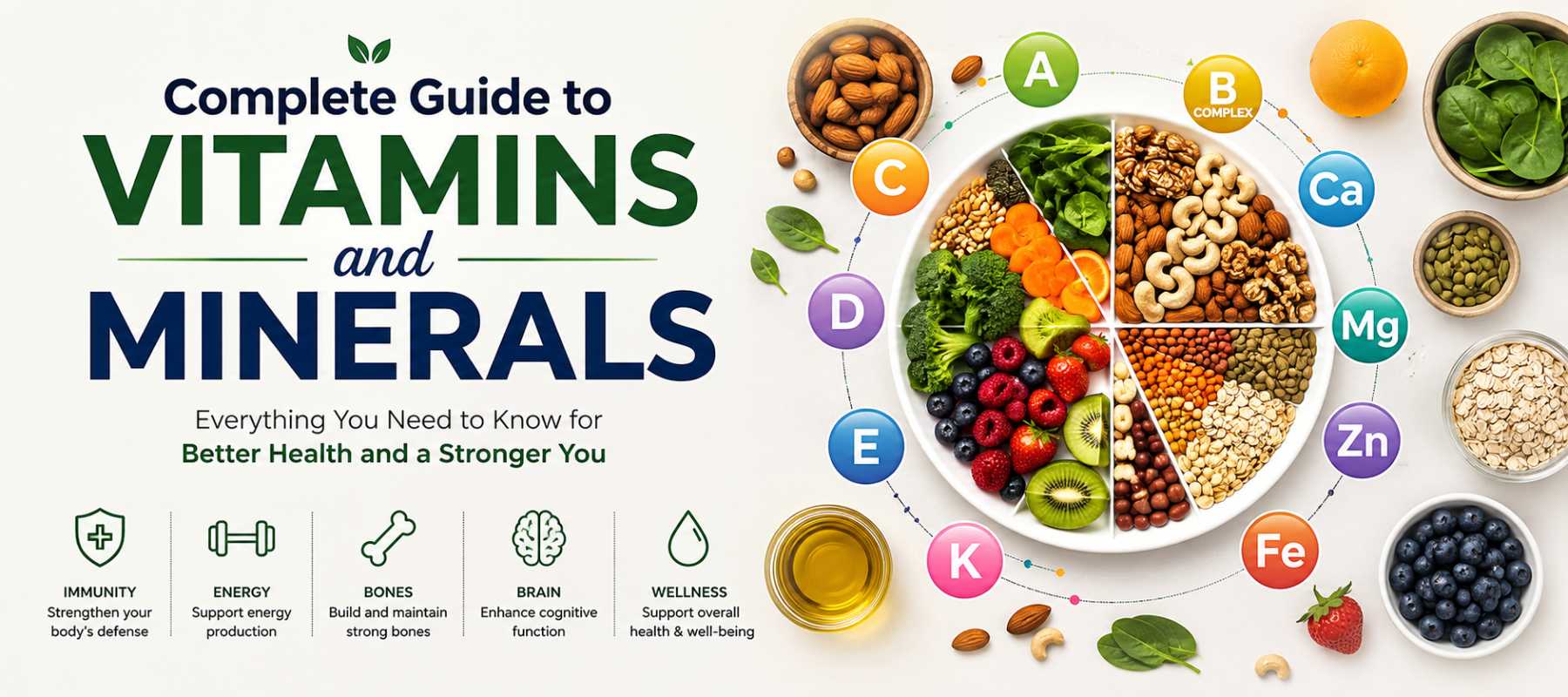
Vitamins and minerals are essential nutrients that play a crucial role in maintaining overall health and well-being. Although the body requires them in relatively small amounts, they support hundreds of biological functions, including energy production, immune defense, bone health, brain function, and cell repair.
A balanced diet typically provides most of the vitamins and minerals the body needs. However, understanding their functions, sources, and recommended intake can help you make informed dietary choices and avoid nutrient deficiencies.
What Are Vitamins?
Vitamins are organic compounds that the body needs to function properly. Since the body cannot produce most vitamins in sufficient quantities, they must be obtained through food or supplements.
Vitamins are divided into two categories:
Fat-Soluble Vitamins
These vitamins are stored in the body’s fatty tissues and liver.
- Vitamin A
- Vitamin D
- Vitamin E
- Vitamin K
Water-Soluble Vitamins
These vitamins are not stored in large amounts and need to be consumed regularly.
- Vitamin C
- Vitamin B Complex (B1, B2, B3, B5, B6, B7, B9, and B12)
Essential Vitamins and Their Functions
Vitamin A
Functions:
- Supports vision and eye health
- Strengthens the immune system
- Promotes healthy skin
Food Sources:
- Carrots
- Sweet potatoes
- Spinach
- Liver
- Eggs
Deficiency Signs:
- Night blindness
- Dry eyes
- Increased susceptibility to infections
Vitamin B Complex
Vitamin B1 (Thiamine)
Supports energy metabolism and nervous system function.
Sources: Whole grains, legumes, nuts, pork.
Vitamin B2 (Riboflavin)
Helps convert food into energy and supports healthy skin.
Sources: Dairy products, eggs, almonds, leafy greens.
Vitamin B3 (Niacin)
Supports metabolism and cardiovascular health.
Sources: Poultry, fish, peanuts, mushrooms.
Vitamin B5 (Pantothenic Acid)
Important for hormone production and energy metabolism.
Sources: Chicken, avocados, mushrooms, whole grains.
Vitamin B6
Supports brain development and immune function.
Sources: Bananas, chickpeas, potatoes, fish.
Vitamin B7 (Biotin)
Promotes healthy hair, skin, and nails.
Sources: Eggs, nuts, seeds, salmon.
Vitamin B9 (Folate)
Essential for cell growth and DNA formation.
Sources: Leafy greens, beans, citrus fruits.
Vitamin B12
Supports nerve function and red blood cell production.
Sources: Meat, fish, dairy products, fortified foods.
Vitamin C
Functions:
- Strengthens immunity
- Supports collagen production
- Acts as a powerful antioxidant
Sources:
- Oranges
- Lemons
- Kiwi
- Strawberries
- Bell peppers
Deficiency Signs:
- Fatigue
- Bleeding gums
- Slow wound healing
Vitamin D
Functions:
- Supports bone health
- Aids calcium absorption
- Contributes to immune function
Sources:
- Sunlight exposure
- Fatty fish
- Egg yolks
- Fortified foods
Deficiency Signs:
- Bone pain
- Muscle weakness
- Increased risk of fractures
Vitamin E
Functions:
- Protects cells from oxidative damage
- Supports immune health
Sources:
- Nuts
- Seeds
- Vegetable oils
- Spinach
Vitamin K
Functions:
- Supports blood clotting
- Maintains bone health
Sources:
- Kale
- Broccoli
- Spinach
- Brussels sprouts
What Are Minerals?
Minerals are inorganic nutrients required for various physiological functions. Unlike vitamins, minerals originate from soil and water and are absorbed by plants or consumed through animal products.
Minerals are categorized into major minerals and trace minerals.
Major Minerals
Calcium
Functions:
- Builds strong bones and teeth
- Supports muscle contraction
- Helps nerve signaling
Sources:
- Dairy products
- Tofu
- Leafy greens
- Fortified plant milk
Magnesium
Functions:
- Supports muscle and nerve function
- Helps regulate blood sugar
- Aids energy production
Sources:
- Nuts
- Seeds
- Whole grains
- Dark leafy vegetables
Potassium
Functions:
- Maintains fluid balance
- Supports heart health
- Regulates blood pressure
Sources:
- Bananas
- Potatoes
- Beans
- Avocados
Phosphorus
Functions:
- Supports bone formation
- Helps produce energy
Sources:
- Meat
- Dairy products
- Fish
- Nuts
Sodium
Functions:
- Maintains fluid balance
- Supports nerve and muscle function
Sources:
- Table salt
- Processed foods
- Natural foods in smaller amounts
Trace Minerals
Iron
Functions:
- Carries oxygen throughout the body
- Supports energy production
Sources:
- Red meat
- Lentils
- Spinach
- Beans
Deficiency Signs:
- Fatigue
- Weakness
- Shortness of breath
Zinc
Functions:
- Supports immunity
- Promotes wound healing
- Helps cell growth
Sources:
- Meat
- Shellfish
- Legumes
- Seeds
Iodine
Functions:
- Supports thyroid hormone production
Sources:
- Iodized salt
- Seafood
- Dairy products
Selenium
Functions:
- Protects cells from oxidative stress
- Supports thyroid health
Sources:
- Brazil nuts
- Seafood
- Eggs
Signs of Vitamin and Mineral Deficiencies
Common symptoms of nutrient deficiencies include:
- Persistent fatigue
- Weak immune function
- Hair loss
- Brittle nails
- Muscle cramps
- Poor concentration
- Slow wound healing
- Bone weakness
If symptoms persist, consult a healthcare professional for proper evaluation and testing.
Can You Get Enough Nutrients from Food Alone?
For most healthy individuals, a varied and balanced diet provides sufficient vitamins and minerals. A nutrient-rich diet should include:
- Fruits and vegetables
- Whole grains
- Lean proteins
- Healthy fats
- Dairy or fortified alternatives
- Nuts and seeds
Certain groups, including pregnant women, older adults, vegans, and individuals with specific medical conditions, may require supplementation under professional guidance.
Tips for Maximizing Nutrient Intake
- Eat a variety of colorful fruits and vegetables.
- Choose whole foods over heavily processed foods.
- Include protein in every meal.
- Stay hydrated.
- Limit excessive sugar and ultra-processed foods.
- Spend time outdoors for natural vitamin D production.
- Follow a balanced eating pattern rather than relying on individual supplements.
Conclusion
Vitamins and minerals are the foundation of good health. From supporting immunity and energy production to maintaining strong bones and healthy organs, these essential nutrients influence near