


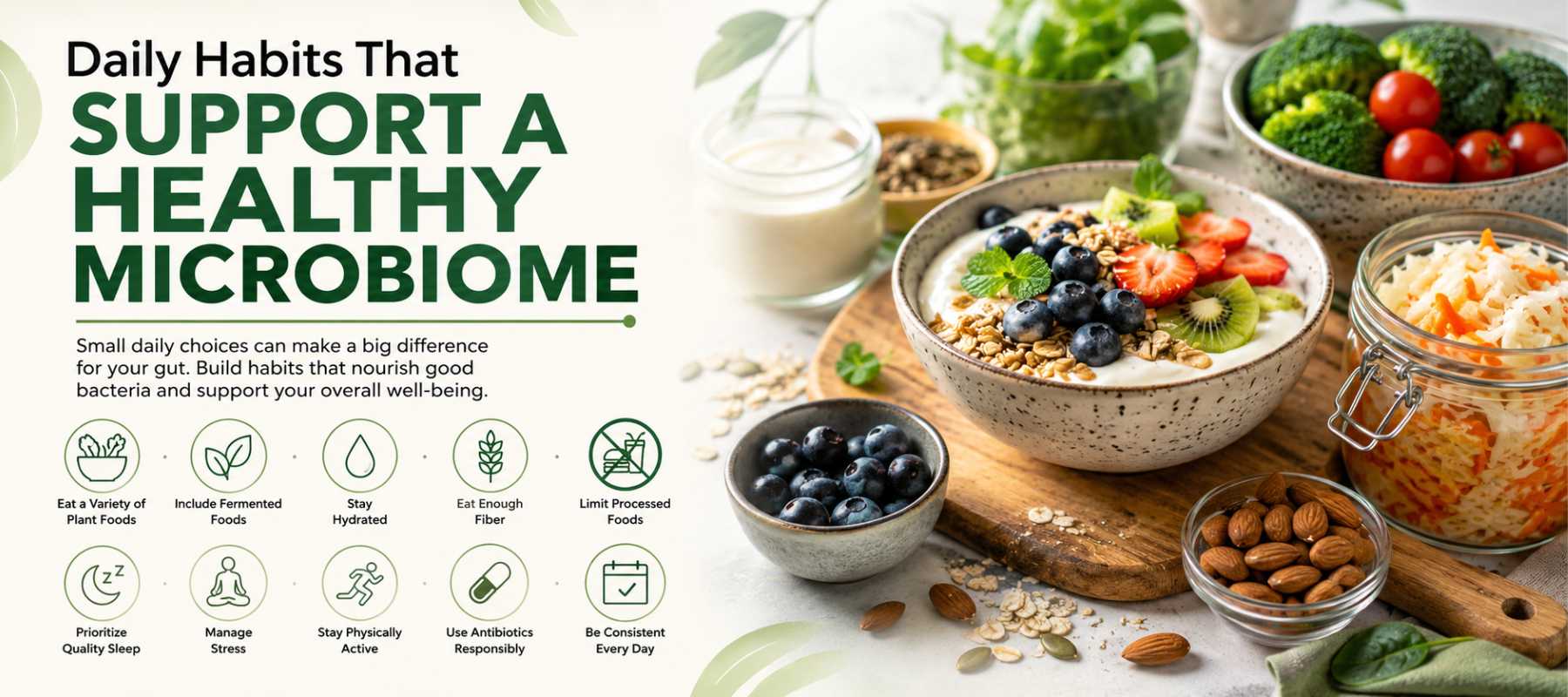
Your digestive system is home to trillions of microorganisms, including bacteria, fungi, and other microbes that together form the gut microbiome. These microscopic organisms play an essential role in digestion, nutrient absorption, immune defense, metabolism, and even mental health. Although factors such as genetics and environment influence the microbiome, everyday lifestyle choices can significantly shape its health and diversity.
Why Gut Microbiome Health Is Important
A well-balanced microbiome helps break down food, supports nutrient absorption, produces beneficial compounds, and acts as a protective barrier against harmful microorganisms. Emerging research also highlights the strong connection between gut health, immune function, mood, and overall well-being.
The encouraging news is that simple, consistent habits can help foster a gut environment where beneficial microbes can flourish.
1. Enjoy a Wide Variety of Plant Foods
Dietary diversity is one of the key foundations of a healthy microbiome. Different types of beneficial bacteria rely on different fibers and plant nutrients to thrive.
Aim to include a broad range of:
- Fruits
- Vegetables
- Whole grains
- Legumes
- Nuts and seeds
A colorful and varied diet provides the nutrients and fibers needed to encourage a diverse microbial community.
2. Make Fiber a Daily Priority
Fiber serves as a primary food source for many beneficial gut bacteria. As these microbes break down fiber, they produce compounds known as short-chain fatty acids, which help maintain gut health and support overall wellness.
Good sources of fiber include:
- Oats
- Lentils
- Beans
- Apples
- Berries
- Broccoli
- Chia seeds
Increasing fiber gradually and staying hydrated can help your digestive system adapt more comfortably.
3. Add Fermented Foods to Your Diet
Fermented foods naturally contain live microorganisms that can contribute to a balanced gut ecosystem.
Some popular choices include:
- Yogurt with live cultures
- Kefir
- Kimchi
- Sauerkraut
- Miso
- Tempeh
Regularly incorporating these foods into meals may help promote microbial diversity and digestive health.
4. Stay Consistently Hydrated
Adequate hydration supports healthy digestion and helps maintain the environment within the digestive tract. Drinking enough water may also contribute to a healthier balance of gut bacteria.
Make hydration a daily habit, particularly during warm weather or periods of increased physical activity.
5. Cut Back on Highly Processed Foods
Ultra-processed foods are often low in fiber and may contain high amounts of added sugars, unhealthy fats, and artificial ingredients.
While occasional indulgences are perfectly reasonable, prioritizing whole and minimally processed foods can provide better support for long-term gut health.
6. Get Sufficient Quality Sleep
Sleep and gut health are closely linked. Poor sleep habits can disrupt the balance of gut microbes, while a healthy microbiome may contribute to better sleep quality.
To support both sleep and gut health:
- Maintain a regular sleep schedule
- Aim for 7–9 hours of sleep each night
- Create a calming bedtime routine
7. Keep Stress Under Control
Long-term stress can affect digestion and may influence the composition of gut bacteria over time.
Helpful stress-management strategies include:
- Deep breathing exercises
- Meditation
- Yoga
- Outdoor walks
- Journaling
Even a few minutes of stress relief each day can positively impact overall well-being.
8. Make Physical Activity Part of Your Routine
Regular movement has been linked to greater microbial diversity and improved digestive function.
You don’t need an intense workout plan to experience benefits. Activities such as walking, cycling, swimming, and strength training can all support gut health and overall fitness.
9. Be Mindful with Antibiotic Use
Antibiotics are important medications that can save lives when needed, but they can also reduce beneficial bacteria in the gut.
Always use antibiotics as prescribed by a healthcare professional and avoid unnecessary use. After completing a course, focusing on a nutrient-rich, fiber-filled diet may help support the restoration of a healthy microbiome.
10. Focus on Consistency Over Perfection
Building a healthy microbiome is not about following fad diets or seeking quick fixes. Long-term benefits are often the result of small, sustainable habits practiced consistently.
Prioritize:
- Eating a variety of fiber-rich foods
- Drinking enough water
- Getting quality sleep
- Managing stress effectively
- Staying physically active
Together, these habits can help cultivate a healthier gut environment and support overall wellness.