

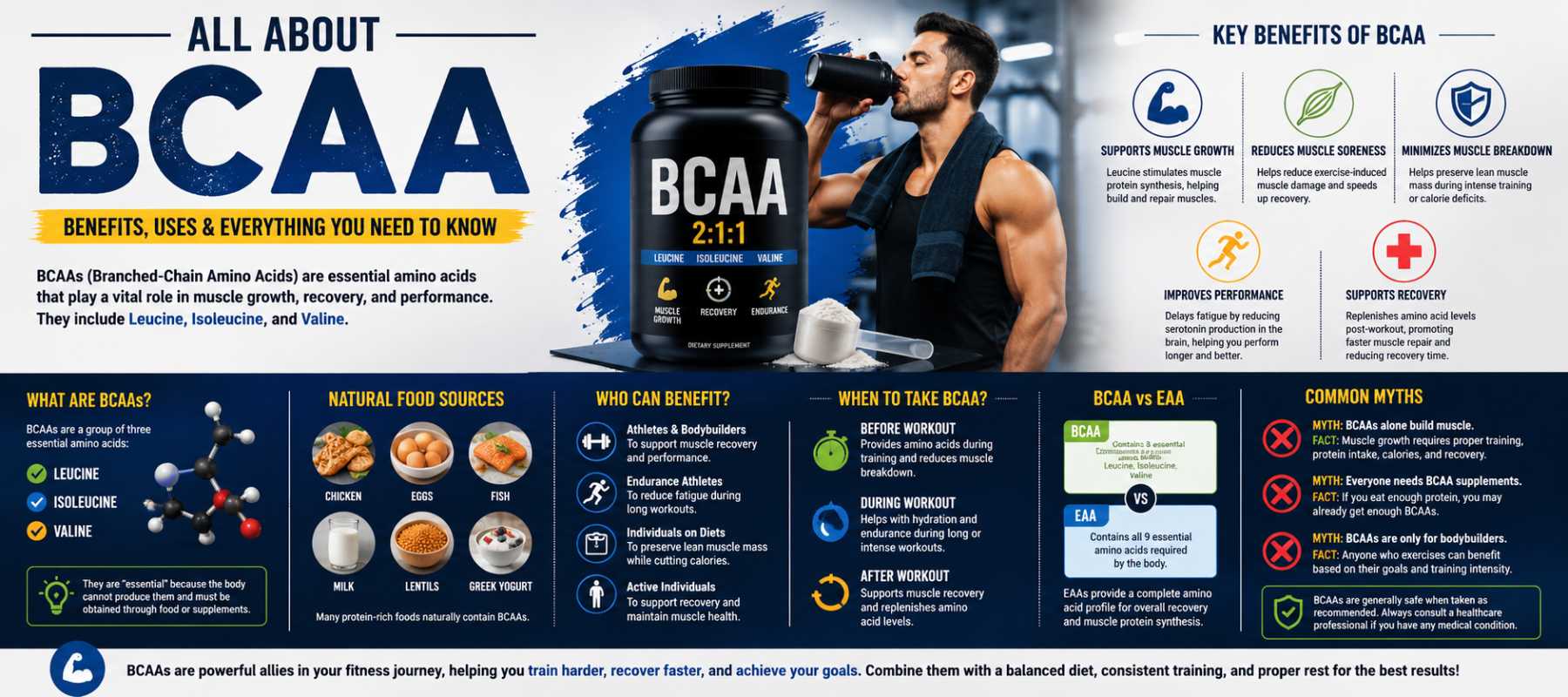
Branched-Chain Amino Acids, commonly known as BCAAs, are among the most widely used supplements in sports nutrition and fitness. Whether you’re aiming to build muscle, improve workout performance, or recover faster after exercise, BCAAs can play an important role in supporting your fitness goals.
What Are BCAAs?
BCAAs are a group of three essential amino acids that the body cannot produce on its own:
- Leucine
- Isoleucine
- Valine
Since these amino acids are considered essential, they must be obtained through dietary sources or supplements. Unlike many other amino acids, BCAAs are processed directly in muscle tissue, making them particularly valuable for energy production and muscle recovery during physical activity.
Why Do BCAAs Matter?
BCAAs support several important processes related to exercise performance and muscle health, including:
- Promoting muscle protein synthesis
- Helping reduce muscle tissue breakdown
- Providing energy during intense training
- Supporting post-workout recovery
- Assisting in reducing exercise-related fatigue
Because of these benefits, BCAAs are commonly included in the nutrition plans of athletes, bodybuilders, runners, and active individuals.
Top Benefits of BCAAs
1. Encourages Muscle Development
Leucine is known for its ability to activate muscle protein synthesis, the process responsible for repairing and building muscle fibers.
When paired with regular strength training and sufficient protein intake, BCAAs can help support muscle growth and preservation.
2. Supports Faster Recovery
Hard training sessions often result in muscle soreness and fatigue. BCAAs may help reduce the extent of muscle damage caused by exercise, allowing the body to recover more efficiently between workouts.
3. Helps Protect Lean Muscle Mass
During prolonged workouts or calorie-restricted diets, the body may use muscle tissue as an energy source.
BCAAs can help minimize muscle breakdown and support the maintenance of lean muscle, making them a useful addition during weight-loss phases.
4. Enhances Workout Performance
BCAAs may contribute to improved endurance by helping delay feelings of fatigue.
Research suggests they can influence neurotransmitters associated with tiredness, allowing individuals to train longer and maintain performance levels.
5. Assists Muscle Recovery
Recovery is essential for consistent progress. BCAAs provide amino acids that support muscle repair after exercise, helping reduce downtime and prepare the body for future training sessions.
Natural Sources of BCAAs
Many everyday foods naturally provide BCAAs, including:
- Chicken
- Turkey
- Eggs
- Fish
- Lean beef
- Milk
- Greek yogurt
- Cottage cheese
- Soy-based foods
- Lentils
- Beans
- Whey protein
Individuals who consume enough high-quality protein throughout the day generally obtain a significant amount of BCAAs from their diet.
Who Can Benefit from BCAAs?
Athletes and Bodybuilders
Useful for supporting muscle recovery, training intensity, and performance.
Endurance Athletes
May help reduce fatigue during long-duration activities such as running, cycling, or swimming.
Individuals Following Weight-Loss Programs
Can help preserve lean muscle mass while maintaining a calorie deficit.
Active Lifestyle Enthusiasts
Supports recovery and muscle maintenance for those who exercise regularly.
When Is the Best Time to Take BCAAs?
BCAAs can be consumed at different times depending on personal preference and training goals.
Before Exercise
May help supply muscles with amino acids and reduce muscle breakdown during training.
During Exercise
Often used during extended or high-intensity workouts to support endurance and hydration.
After Exercise
Can assist with recovery by providing amino acids needed for muscle repair.
The most effective timing varies based on workout type, nutritional habits, and individual objectives.
BCAA vs. EAA: Understanding the Difference
BCAAs consist of three essential amino acids:
- Leucine
- Isoleucine
- Valine
EAAs (Essential Amino Acids), on the other hand, include all nine amino acids that the body cannot produce naturally.
While BCAAs focus on muscle support and recovery, EAAs provide a broader range of amino acids required for complete muscle protein synthesis and overall recovery.
Common Misconceptions About BCAAs
Myth 1: BCAAs Alone Build Muscle
Reality: Muscle growth depends on several factors, including adequate protein intake, resistance training, calorie consumption, and proper recovery. BCAAs can support these processes but are not a complete solution by themselves.
Myth 2: Everyone Needs a BCAA Supplement
Reality: Individuals who consume enough protein-rich foods may already meet their BCAA requirements through diet alone.
Myth 3: BCAAs Are Only Useful for Bodybuilders
Reality: BCAAs can also benefit endurance athletes, recreational exercisers, and anyone looking to support recovery and muscle maintenance.
Are BCAAs Safe to Use?
For most healthy adults, BCAAs are generally considered safe when used according to recommended serving instructions.
However, people with underlying medical conditions, those taking medications, pregnant women, or nursing mothers should consult a healthcare professional before adding any supplement to their routine.