

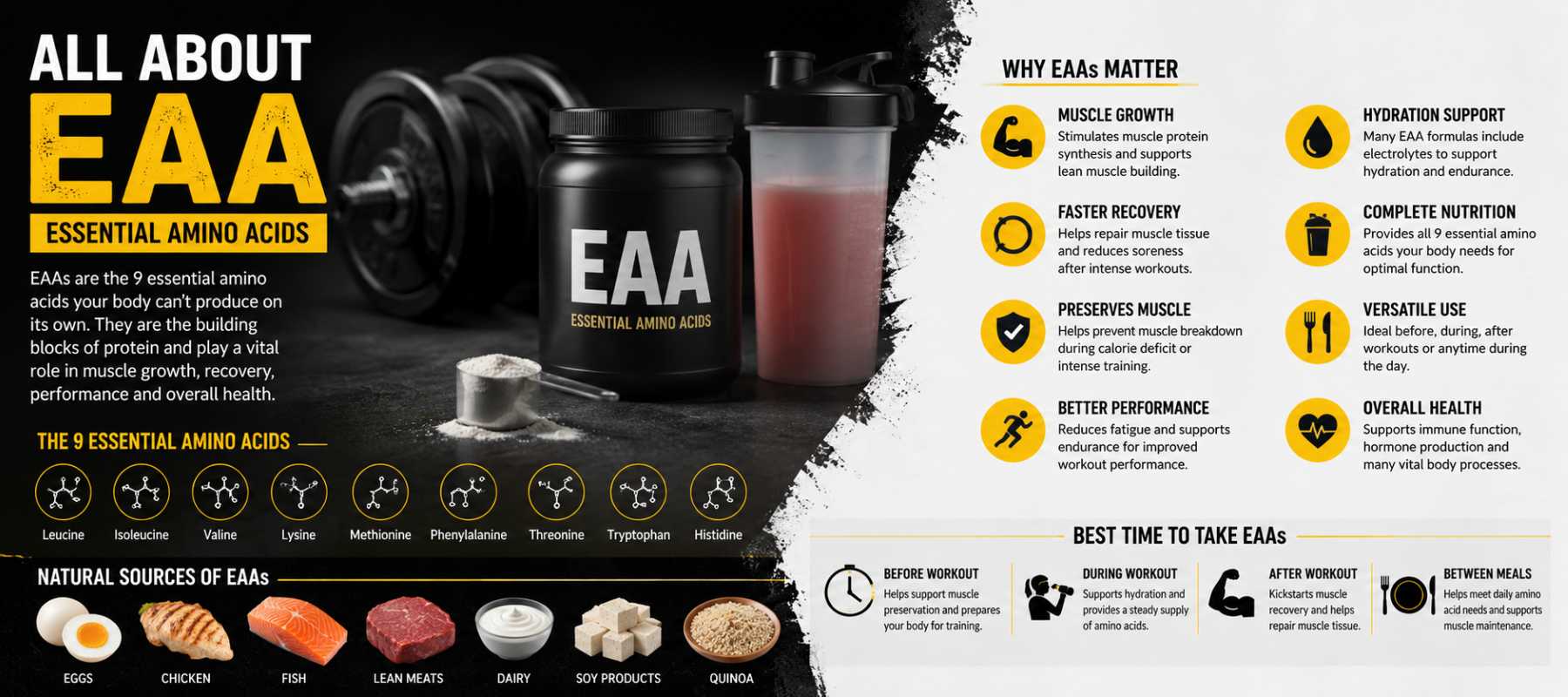
Essential Amino Acids, commonly known as EAAs, have become increasingly popular among fitness enthusiasts, athletes, and individuals focused on maintaining a healthy lifestyle. These vital nutrients play a key role in muscle development, recovery, and overall body function. Understanding how EAAs work can help you optimize your nutrition and achieve your fitness goals more effectively.
Understanding Essential Amino Acids
Amino acids are the fundamental components that make up proteins. They are involved in numerous processes throughout the body, including muscle repair, enzyme production, hormone regulation, and tissue maintenance.
Out of the 20 amino acids required by the body, nine are classified as essential. Since the body cannot produce these on its own, they must be obtained through dietary sources or supplements.
The 9 Essential Amino Acids
- Leucine
- Isoleucine
- Valine
- Lysine
- Methionine
- Phenylalanine
- Threonine
- Tryptophan
- Histidine
Why Are EAAs So Important?
Essential amino acids contribute to many crucial functions that support both athletic performance and general health.
1. Promotes Muscle Growth
EAAs are essential for muscle protein synthesis—the process responsible for repairing and building muscle tissue after exercise. Among them, leucine is particularly effective at triggering muscle growth.
2. Accelerates Recovery
Physical training places stress on muscles, often leading to soreness and fatigue. EAAs provide the building blocks needed to repair muscle fibers, helping the body recover more efficiently.
3. Helps Maintain Lean Muscle
During calorie-restricted diets or weight-loss programs, the body may use muscle tissue as an energy source. Adequate EAA intake can help protect and preserve lean muscle mass.
4. Supports Exercise Performance
By helping reduce muscle fatigue and supporting endurance, EAAs may contribute to improved workout performance and greater training consistency.
5. Contributes to Overall Wellness
EAAs do more than support fitness goals. They also play important roles in immune health, hormone production, neurotransmitter function, and tissue repair throughout the body.
EAA vs. BCAA: Understanding the Difference
Many people use the terms EAA and BCAA interchangeably, but they are not the same.
BCAAs Include:
- Leucine
- Isoleucine
- Valine
EAAs Include:
All nine essential amino acids, including the three branched-chain amino acids listed above.
While BCAAs focus on a smaller group of amino acids associated with muscle recovery and workout performance, EAAs provide the complete set of essential amino acids required for optimal muscle-building and recovery processes.
Simply put, EAAs offer more comprehensive amino acid support than BCAAs alone.
Key Benefits of EAA Supplements
Supports Muscle Development
EAAs provide the complete range of amino acids needed for building and repairing muscle tissue.
Reduces Muscle Breakdown
Supplementing with EAAs may help minimize muscle loss during intense training periods or calorie deficits.
Assists Hydration
Many EAA formulas contain electrolytes that can help maintain fluid balance and support hydration during exercise.
Improves Training Consistency
By supporting recovery and reducing fatigue, EAAs may help individuals train more frequently and effectively.
Convenient Nutritional Support
EAA supplements offer a simple way to increase essential amino acid intake, especially around workouts or during busy schedules.
Who Should Consider EAAs?
EAAs may be beneficial for:
- Strength and resistance training athletes
- Bodybuilders
- Endurance athletes
- Recreational gym-goers
- Individuals following weight-loss diets
- Vegetarians and vegans seeking additional amino acid support
- Anyone looking to enhance exercise recovery
When Is the Best Time to Take EAAs?
Before Exercise
Consuming EAAs before training may help support muscle preservation and prepare the body for physical activity.
During Exercise
Many athletes use EAAs during workouts to provide a steady supply of amino acids and support hydration.
After Exercise
Post-workout EAA intake can help initiate recovery and support muscle repair.
Between Meals
EAAs can also be consumed between meals to help maintain amino acid availability throughout the day.
Natural Sources of Essential Amino Acids
Although supplements are popular, EAAs are naturally found in many high-protein foods, including:
- Eggs
- Chicken
- Fish
- Lean meats
- Dairy products
- Soy-based foods
- Quinoa
- Greek yogurt
- Cottage cheese
- Whey protein
A well-balanced diet that includes quality protein sources can help meet daily essential amino acid requirements.
Are EAAs Safe to Use?
For most healthy adults, EAA supplements are generally considered safe when consumed according to recommended serving guidelines. They can be a useful addition to a balanced diet and active lifestyle.
However, anyone with a medical condition or taking prescription medications should seek advice from a healthcare professional before introducing new supplements.
Common Myths About EAAs
Myth 1: EAAs Are Only for Bodybuilders
Reality: EAAs can benefit anyone who participates in regular physical activity or wants to support muscle health.
Myth 2: EAAs and BCAAs Are Identical
Reality: BCAAs contain only three amino acids, whereas EAAs provide all nine essential amino acids required by the body.
Myth 3: Taking EAAs Eliminates the Need for Protein
Reality: EAAs are designed to complement a healthy diet, not replace whole-food protein sources.
Myth 4: Higher EAA Intake Equals Faster Muscle Growth
Reality: Muscle development depends on a combination of proper training, nutrition, recovery, and consistency—not excessive supplementation.